What’s New in UAE Industrial Thermography Standards: The Dubai Electricity and Water Authority (DEWA) updated technical guidelines in 2024 requiring periodic thermographic inspection of electrical installations in industrial facilities. These requirements align with the UAE Fire and Life Safety Code administered by Dubai Civil Defence. The guidelines mandate annual thermal surveys of main distribution boards, motor control centers, and critical electrical infrastructure.
The Emirates Authority for Standardization and Metrology (ESMA) published updated certification requirements for thermography service providers operating in the UAE. These standards reference ISO 18434-1 for condition monitoring and diagnostics of machines using thermography. The Regulation and Supervision Bureau (RSB) for Abu Dhabi implemented similar requirements for industrial facilities under their jurisdiction.
The Ministry of Human Resources and Emiratisation (MOHRE) updated workplace safety regulations emphasizing predictive maintenance programs including thermography. The Abu Dhabi Occupational Safety and Health Center (OSHAD) published technical guidance on thermal imaging for electrical safety compliance. Dubai Municipality now requires thermographic survey reports as part of building safety certification for industrial occupancies.
The Society for Maintenance and Reliability Professionals (SMRP) and American Society for Nondestructive Testing (ASNT) continue to update certification standards for thermographers. These developments make thermography based maintenance scheduling increasingly important for UAE industrial plant operators seeking regulatory compliance and operational excellence.
About 3PH Tech Services Engineering Team: This practical guide is prepared by 3PH Tech Services’ electrical and reliability engineering specialists. Our team has extensive experience in UAE industrial thermography programs, predictive maintenance implementation, and electrical system assessments. Our engineers hold qualifications including Bachelor’s degrees in Electrical Engineering, Level II and Level III thermography certifications per ASNT standards, and specialized training in industrial infrared applications.
3PH Tech Services maintains DEWA-approved contractor status and works directly with Dubai Municipality, Trakhees, and industrial zone authorities across the UAE. Our team has completed thermography programs for manufacturing plants, petrochemical facilities, data centers, commercial buildings, and utility infrastructure. We specialize in electrical thermography, mechanical thermography, building envelope surveys, and predictive maintenance program development.
Learn more about our engineering team and certifications.
Scope of This Technical Guide: This article provides practical guidance on thermography based maintenance scheduling for industrial plants under UAE regulations and international standards. These include ISO 18434-1, NFPA 70B, and ASNT guidelines as of December 2025. Individual facility requirements vary based on equipment types, operational criticality, and regulatory jurisdiction.
For specific advice regarding your thermography program requirements, inspection frequencies, equipment selection, or technical specifications tailored to your industrial facility, consultation with qualified thermography professionals is recommended. Contact 3PH Tech Services for professional guidance addressing your specific needs.
Understanding Thermography Based Maintenance Scheduling
This practical guide on thermography based maintenance scheduling provides UAE industrial plant operators with systematic approaches for implementing effective thermal inspection programs. Thermography enables detection of equipment problems before failure occurs. Maintenance teams can schedule repairs during planned outages rather than responding to emergency breakdowns.
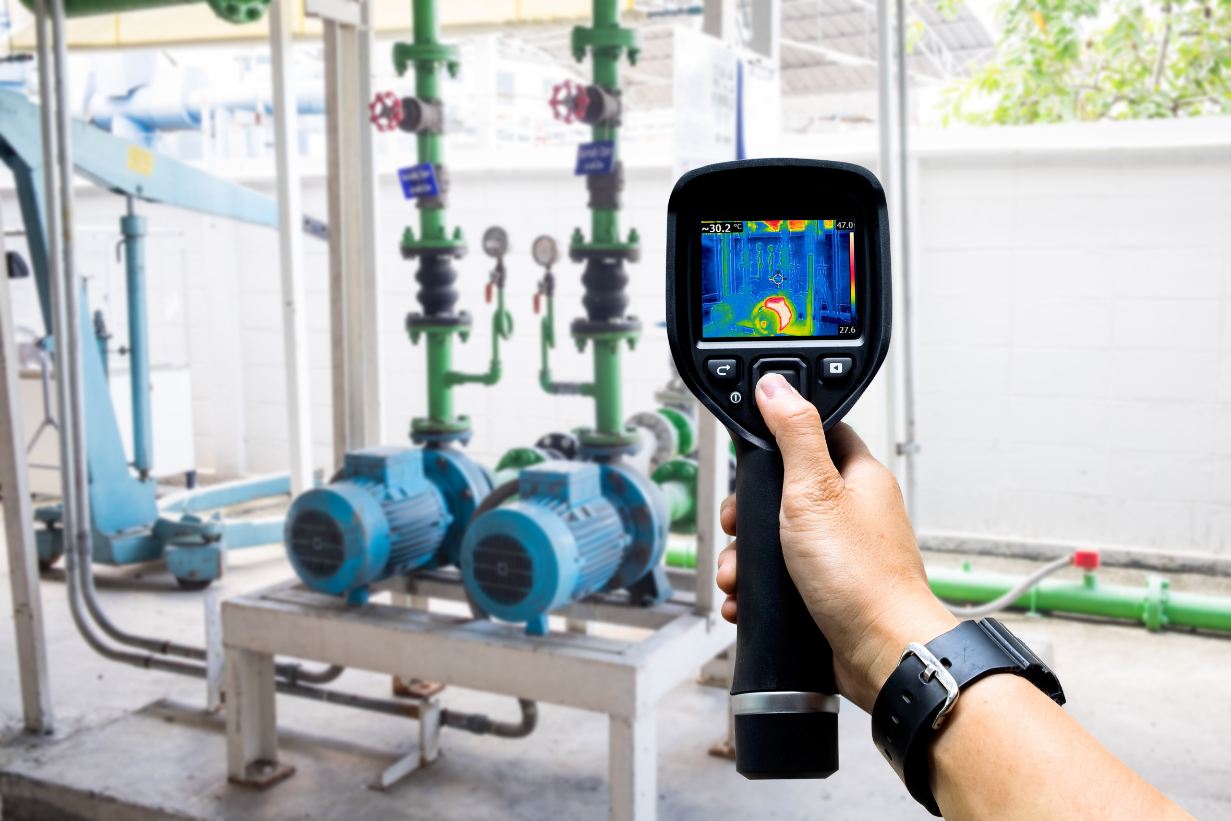
Infrared thermography detects thermal anomalies indicating electrical faults, mechanical wear, insulation degradation, and process inefficiencies. Industrial plants across Dubai, Abu Dhabi, and the UAE operate critical equipment where unplanned failures create significant production losses, safety hazards, and regulatory concerns. Thermography based maintenance scheduling addresses these challenges through systematic inspection and condition-based repair planning.
The approach integrates thermal imaging technology with computerized maintenance management systems (CMMS). When thermographers identify anomalies, the findings generate prioritized work orders. Maintenance planners schedule interventions based on severity classification and equipment criticality. This systematic approach replaces reactive repairs with planned maintenance activities.
UAE industrial facilities face mounting pressure to improve reliability while controlling maintenance costs. Thermography based maintenance scheduling delivers multiple benefits. These include reduced unplanned downtime, lower repair costs, extended equipment life, improved safety, and compliance with DEWA and Dubai Civil Defence requirements. Modern thermal imaging equipment and analysis software make thermography accessible for facilities of all sizes.
This guide examines how UAE industrial plants can implement thermography based maintenance scheduling programs. Coverage includes equipment selection, inspection procedures, anomaly classification, CMMS integration, and regulatory compliance. Plants following these practices typically achieve 25-40% reduction in electrical failures and 15-25% reduction in overall maintenance costs.
The Science Behind Infrared Thermography
Understanding the scientific principles behind thermography enables effective application for industrial maintenance scheduling.
Infrared Radiation Fundamentals
Thermal Energy Emission
All objects with temperature above absolute zero emit infrared radiation. The intensity and wavelength of emitted radiation correlates with object temperature. Thermal cameras detect this radiation and convert it to visible images showing temperature distribution. Hotter objects appear brighter in standard thermal palettes.
Emissivity Considerations
Emissivity describes how effectively a surface emits thermal radiation compared to a perfect blackbody. Different materials have different emissivity values. Polished metals have low emissivity (0.1-0.3) while painted surfaces have high emissivity (0.9-0.95). Thermographers must account for emissivity when measuring absolute temperatures. Incorrect emissivity settings cause measurement errors.
Reflected Temperature Effects
Surfaces reflect infrared radiation from surrounding objects. Hot objects nearby can create apparent hot spots on reflective surfaces. Cool sky reflections can make outdoor equipment appear cooler than actual temperature. Thermographers must identify and account for reflected temperature influences during surveys.
Heat Transfer Mechanisms
Conduction in Electrical Systems
Poor electrical connections create resistance. Current flowing through resistance generates heat per Joule’s law (P = I²R). This heat conducts through connection components. Thermal imaging detects elevated temperatures at connection points indicating high resistance faults. The temperature rise correlates with fault severity.
Convection Effects
Air movement carries heat away from equipment surfaces. Forced convection from cooling fans or ambient wind affects surface temperatures. Thermographers must consider convection effects when interpreting thermal patterns. Equipment under different airflow conditions shows different thermal signatures for equivalent internal conditions.
Radiation Heat Loss
Equipment radiates heat to surroundings. Radiation heat transfer depends on surface temperature, emissivity, and surrounding temperature. Hot equipment in cool environments loses heat faster through radiation. UAE’s elevated ambient temperatures reduce radiation heat loss, potentially masking thermal anomalies that would be visible in cooler climates.
Temperature Measurement Accuracy
Camera Specifications
Thermal camera accuracy depends on detector sensitivity, temperature range, and calibration. Industrial cameras typically achieve ±2°C or ±2% accuracy. Higher-end cameras achieve ±1°C accuracy. Accuracy specifications apply under controlled conditions. Field conditions introduce additional uncertainty.
Environmental Factors
Ambient temperature, humidity, and distance affect measurement accuracy. Atmospheric absorption increases with distance and humidity. UAE’s high humidity and long-range outdoor applications require compensation. Most industrial applications at distances under 10 meters have minimal atmospheric effects.
Actionable Takeaway
Invest in thermographer training covering infrared physics, emissivity, and environmental factors. Understanding these principles enables accurate interpretation of thermal images. Misinterpretation leads to missed faults or unnecessary maintenance. Ensure your thermography team holds recognized certifications demonstrating competency. Contact 3PH Tech Services to arrange thermography training for your maintenance personnel.
Equipment and Applications for Industrial Thermography
Selecting appropriate equipment and understanding applications enables effective thermography based maintenance scheduling for industrial plants.
Thermal Camera Selection
Resolution and Sensitivity
Camera resolution determines the level of detail captured in thermal images. Higher resolution cameras (640×480 pixels or greater) detect smaller anomalies and enable imaging from greater distances. Thermal sensitivity (NETD) indicates the smallest temperature difference detectable. Industrial applications typically require NETD below 50mK for reliable anomaly detection.
Temperature Range
Select cameras with temperature range matching your applications. Electrical thermography typically requires -20°C to 150°C range. Mechanical applications involving bearings and motors may need ranges to 300°C. Process applications in petrochemical or manufacturing may require specialized high-temperature cameras reaching 1,500°C or higher.
Features for Industrial Use
Industrial cameras should include adjustable emissivity settings, multiple color palettes, image storage, and reporting software. Interchangeable lenses enable wide-angle surveys and telephoto inspection of distant equipment. Radiometric video recording captures dynamic thermal events. Wireless connectivity simplifies data transfer and reporting.
Electrical Thermography Applications
Switchgear and Distribution Boards
Inspect main switchboards, distribution boards, and motor control centers for connection problems, overloaded circuits, and component failures. Focus on bus bar connections, breaker terminations, fuse holders, and cable terminations. DEWA guidelines require annual thermographic inspection of main electrical infrastructure.
Transformers
Survey transformer connections, bushings, cooling systems, and tank surfaces. Elevated bushing temperatures indicate internal connection problems. Abnormal tank heating patterns suggest core or winding issues. Cooling system blockages appear as uneven temperature distribution across radiators.
Motors and Drives
Inspect motor terminal boxes, cable connections, and cooling systems. Variable frequency drives generate heat requiring adequate ventilation. Blocked cooling vents and failed fans cause elevated temperatures. Motor frame temperatures indicate bearing condition and loading.
Mechanical Thermography Applications
Rotating Equipment
Monitor bearings, couplings, and drive systems using thermal imaging. Bearing degradation causes localized heating detectable before vibration analysis identifies problems. Misalignment creates uneven heating patterns across couplings. Belt drives show heating from tension problems or wear.
Heat Exchangers and Cooling Systems
Identify blocked tubes, fouled surfaces, and failed components in heat exchangers. Cooling tower fills show uneven water distribution. Chiller condensers reveal refrigerant distribution problems. Process coolers indicate fouling affecting heat transfer efficiency.
Steam Systems
Detect failed steam traps, insulation defects, and valve leakage. Failed steam traps discharge live steam creating significant energy waste. Wet insulation appears cooler than surrounding dry insulation. Leaking valves show downstream heating from steam passage.
Building and Process Applications
Electrical Enclosures
Survey junction boxes, control panels, and outdoor electrical enclosures. UAE’s elevated ambient temperatures stress electrical equipment. Inadequate enclosure ventilation causes component overheating. Failed cooling systems in outdoor enclosures create thermal problems during summer months.
Refractory and Furnaces
Monitor refractory linings in furnaces, kilns, and incinerators. Refractory degradation allows heat breakthrough visible as hot spots on outer shells. Early detection enables planned refractory repairs avoiding emergency shutdowns. Regular surveys track degradation progression enabling maintenance planning.
Actionable Takeaway
Select thermal camera specifications matching your primary applications. Industrial facilities typically need cameras with at least 320×240 resolution, NETD below 50mK, and temperature range to 300°C. Budget for quality equipment rather than purchasing inadequate cameras requiring early replacement. Request equipment selection guidance from our thermography specialists to identify optimal camera specifications for your industrial facility.
Thermal Camera Specifications Comparison
| Specification | Entry Level | Professional | Advanced |
| Resolution | 160×120 | 320×240 | 640×480+ |
| Thermal Sensitivity (NETD) | <100mK | <50mK | <30mK |
| Temperature Range | -20°C to 150°C | -20°C to 350°C | -40°C to 650°C+ |
| Accuracy | ±2°C or ±2% | ±2°C or ±2% | ±1°C or ±1% |
| Frame Rate | 9 Hz | 30 Hz | 60 Hz+ |
| Interchangeable Lenses | No | Yes | Yes |
| Radiometric Video | No | Limited | Full |
| Best Application | Basic screening | General industrial | Critical applications |
| Typical Cost (AED) | 8,000-15,000 | 25,000-60,000 | 80,000-200,000+ |
Developing a Thermography Inspection Program
Systematic program development ensures effective thermography based maintenance scheduling for industrial plants.
Program Planning
Equipment Inventory and Prioritization
Create inventory of all equipment candidates for thermographic inspection. Include electrical distribution systems, motors, transformers, rotating equipment, and process systems. Prioritize based on criticality, failure history, and consequences of failure. Critical equipment serving essential processes receives higher inspection frequency.
Inspection Frequency Determination
Establish inspection frequencies based on equipment criticality and condition. Annual inspection represents minimum frequency for critical electrical systems per DEWA guidelines. Quarterly inspection suits equipment with known problems or high failure consequences. Monthly inspection applies to critical equipment in harsh conditions or with active degradation.
Route Development
Organize equipment into logical inspection routes minimizing travel time and ensuring complete coverage. Group equipment by location, system, or voltage level. Document routes with equipment identification, location details, and access requirements. Standardized routes ensure consistent coverage across inspection cycles.
Inspection Procedures
Pre-Inspection Preparation
Review previous inspection reports and maintenance history before surveys. Identify equipment with prior anomalies requiring follow-up. Verify equipment accessibility and obtain necessary permits. Coordinate with operations regarding equipment status and loading conditions.
Optimal Inspection Conditions
Conduct electrical thermography with equipment under normal operating load. Minimum 40% load is recommended for reliable anomaly detection. Higher loads increase temperature differentials making faults more visible. Document actual load conditions during inspection for accurate severity assessment.
Systematic Survey Technique
Follow consistent survey patterns ensuring complete equipment coverage. Scan systematically from top to bottom and left to right. Capture reference images showing equipment identification. Document anomalies with close-up images and temperature measurements. Record ambient conditions affecting thermal signatures.
Documentation Requirements
Image Capture Standards
Capture thermal and visual images of all anomalies. Include reference images showing equipment context and identification. Record spot temperatures at anomaly locations and reference points. Document temperature differential (ΔT) between anomaly and reference. Save images in radiometric format preserving temperature data.
Report Content
Prepare inspection reports including equipment identification, inspection date, load conditions, ambient temperature, and findings summary. Document each anomaly with images, temperature data, severity classification, and recommended actions. Include trending comparison with previous inspections where available.
Data Management
Store inspection data in organized database enabling trending analysis and historical comparison. Link thermography records to equipment asset records in CMMS. Maintain image archives preserving radiometric data for future analysis. Implement backup procedures protecting valuable inspection records.
Actionable Takeaway
Develop written thermography procedures documenting inspection routes, survey techniques, and reporting requirements. Standardized procedures ensure consistent results across thermographers and inspection cycles. Include procedures in your facility’s maintenance management documentation. Request procedure development support to create thermography inspection procedures tailored to your industrial plant.
Interpreting Thermal Images and Anomaly Classification
Accurate interpretation and classification enables effective thermography based maintenance scheduling with appropriate urgency for identified problems.
Thermal Pattern Analysis
Normal Thermal Patterns
Understand expected thermal patterns for equipment types before identifying anomalies. Three-phase electrical systems should show balanced temperatures across phases. Motors show gradual temperature increase from coupling to fan end. Heat exchangers show temperature gradients from inlet to outlet. Familiarity with normal patterns enables recognition of abnormal conditions.
Anomaly Identification
Anomalies appear as unexpected temperature differences from normal patterns. Electrical anomalies include hot connections, overloaded components, and failing equipment. Mechanical anomalies include bearing hot spots, friction heating, and blocked cooling. Process anomalies include fouling, blockages, and flow distribution problems.
Comparative Analysis
Compare component temperatures against similar components under equivalent conditions. Phase-to-phase comparison in three-phase systems identifies unbalanced conditions. Comparison between identical equipment identifies individual unit problems. Trending comparison with previous inspections tracks condition changes over time.
Severity Classification Systems
Temperature Rise Classification
NETA (InterNational Electrical Testing Association) classification uses temperature rise above reference to categorize severity. Category 1 (1-10°C rise) indicates possible deficiency requiring investigation. Category 2 (11-20°C rise) indicates probable deficiency requiring repair at next opportunity. Category 3 (21-40°C rise) indicates deficiency requiring repair as soon as possible. Category 4 (>40°C rise) indicates major deficiency requiring immediate repair.
Delta-T Classification
Alternative classification compares anomaly temperature to ambient or maximum rated temperature. Temperature approaching 75% of maximum rated value indicates significant concern. Temperature exceeding maximum rated value requires immediate action regardless of delta-T above reference.
Risk-Based Classification
Consider failure consequences alongside temperature severity. Critical equipment serving essential processes may warrant urgent response for lower-severity anomalies. Non-critical equipment may accept higher temperatures with scheduled repair. Document risk assessment basis for classification decisions.
Common Anomaly Types
Electrical Connection Problems
High-resistance connections appear as localized hot spots at terminations, splices, or bolted joints. Causes include loose connections, corrosion, inadequate torque, and thermal cycling damage. Severity depends on temperature rise and current load. Low-load anomalies indicate more severe underlying problems than equivalent temperatures at full load.
Overloaded Circuits
Overloaded conductors and components show elevated temperatures along their length. Distinguish from connection problems showing localized heating at specific points. Overloading indicates circuit design deficiencies or changed loading conditions. Address root cause rather than treating as connection problem.
Component Failures
Failing components including breakers, contactors, and capacitors show abnormal thermal signatures. Internal contact degradation in breakers causes heating. Contactor coils approaching failure show elevated temperatures. Capacitors with internal faults show heating not explained by normal operation.
Mechanical Wear
Bearing wear causes localized heating at bearing locations. Early-stage bearing degradation detectable by thermography before vibration analysis identification. Coupling misalignment creates uneven heating patterns. Belt drive problems show heating at pulleys and along belt paths.
Actionable Takeaway
Establish clear severity classification criteria for your thermography program. Document classification system in written procedures. Train thermographers on consistent application of classification criteria. Link severity classifications to maintenance response requirements in your CMMS. Contact our reliability engineers to develop anomaly classification procedures appropriate for your industrial facility.
Anomaly Severity Classification and Response Guidelines
| Severity Level | Temperature Rise (ΔT) | Typical Causes | Recommended Response | Timeframe |
| Priority 1 (Critical) | >40°C above reference | Severe connection failure, major overload, imminent component failure | Immediate repair, consider load reduction or isolation | Within 24 hours |
| Priority 2 (Serious) | 21-40°C above reference | Significant connection problem, moderate overload, advancing failure | Schedule urgent repair | Within 1-2 weeks |
| Priority 3 (Intermediate) | 11-20°C above reference | Developing connection problem, minor overload | Schedule repair at next opportunity | Within 1-3 months |
| Priority 4 (Minor) | 1-10°C above reference | Possible early-stage problem | Monitor, investigate root cause | Next scheduled inspection |
| Normal | Within expected range | Proper operation | Continue normal monitoring | Per inspection schedule |
Integrating Thermography with CMMS and Maintenance Planning
Integration with maintenance management systems maximizes value from thermography based maintenance scheduling programs.
CMMS Integration
Asset Linkage
Link thermography inspection records to equipment asset records in your CMMS. This enables tracking of thermal history alongside other maintenance activities. Asset linkage supports trending analysis showing condition progression. Maintenance planners access thermal history when evaluating work requests.
Automated Work Order Generation
Configure CMMS to generate work orders automatically from thermography findings. Define severity-based routing rules directing work orders to appropriate maintenance groups. Include thermal images and temperature data in work order documentation. Track work order completion and resolution effectiveness.
Inspection Scheduling
Schedule thermography inspections through CMMS like other preventive maintenance tasks. CMMS tracking ensures inspection completion per established frequencies. Overdue inspection alerts identify coverage gaps. Resource planning incorporates thermography workload alongside other maintenance activities.
Maintenance Planning Integration
Condition-Based Scheduling
Use thermography findings to schedule maintenance based on actual equipment condition rather than fixed intervals. Equipment showing normal thermal signatures may extend intervals between other maintenance. Equipment showing thermal anomalies receives accelerated attention. This approach improves maintenance efficiency while ensuring reliability.
Outage Planning
Incorporate thermography findings into planned outage work scopes. Thermal anomalies identified during normal operation become outage repair items. Pre-outage thermography surveys identify additional work scope. Post-outage thermography verifies repair effectiveness before returning equipment to service.
Spare Parts Planning
Thermography-identified anomalies enable proactive spare parts procurement. Parts for scheduled repairs arrive before maintenance windows. Reduced emergency procurement lowers costs and expediting fees. Inventory planning incorporates expected demand from condition-based findings.
Trending and Analysis
Historical Comparison
Compare current thermal images against previous inspections of the same equipment. Temperature trending shows condition progression over time. Improving trends confirm maintenance effectiveness. Worsening trends indicate accelerating degradation requiring attention.
Fleet Analysis
Analyze thermal data across similar equipment populations. Identify systemic issues affecting multiple units. Compare individual equipment against fleet averages. Fleet analysis identifies both outliers requiring attention and common problems requiring design or specification changes.
Performance Metrics
Track thermography program performance metrics including inspection completion rates, anomaly detection rates, and repair effectiveness. Monitor percentage of failures preceded by thermal warnings. Calculate avoided failures and cost savings attributable to thermography. Use metrics to demonstrate program value and justify continued investment.
Actionable Takeaway
Integrate thermography data with your CMMS rather than maintaining separate records. Integration enables work order automation, trending analysis, and performance tracking. If your current CMMS lacks thermography integration capability, evaluate software upgrades or third-party integration tools. Request CMMS integration consultation to connect your thermography program with maintenance planning systems.
UAE Regulatory Compliance and Safety Requirements
Thermography based maintenance scheduling supports compliance with UAE electrical safety and workplace regulations.
DEWA Electrical Safety Requirements
Distribution Board Inspection
DEWA regulations require periodic inspection of electrical distribution systems in industrial facilities. Thermographic survey provides evidence of proper electrical system condition. Annual thermal surveys of main distribution boards, sub-main panels, and motor control centers meet inspection requirements. Document survey results in electrical system maintenance records.
High Voltage Equipment
High voltage installations require specialized inspection procedures. Thermography enables non-contact assessment without exposure to energized high voltage equipment. Survey transformers, switchgear, and cable terminations using appropriate safety distances. Follow DEWA safety rules for work near high voltage installations.
Documentation for DEWA Inspection
Maintain thermography reports as part of electrical installation documentation. DEWA inspectors may request evidence of periodic thermal surveys. Organize reports by date, equipment, and findings for easy retrieval. Include corrective action documentation showing response to identified anomalies.
Dubai Civil Defence Requirements
Fire Prevention
Dubai Civil Defence regulations emphasize fire prevention through proper electrical system maintenance. Thermography identifies electrical faults creating fire hazards before ignition occurs. Loose connections, overloaded circuits, and failing components represent fire risks detectable through thermal imaging. Regular thermography supports fire prevention compliance.
Building Safety Certification
Industrial building safety certification may require evidence of electrical system maintenance. Thermography reports demonstrate proactive maintenance practices. Include thermography program documentation in building safety files. Update documentation annually or per inspection cycle completion.
Workplace Safety Compliance
MOHRE Requirements
Ministry of Human Resources and Emiratisation (MOHRE) regulations require safe workplace conditions. Electrical hazards represent significant workplace safety concerns. Thermography-based identification and correction of electrical anomalies reduces worker exposure to electrical fires and equipment failures. Document thermography program as part of workplace safety management.
OSHAD Guidelines
Abu Dhabi Occupational Safety and Health Center (OSHAD) provides guidance on industrial safety including electrical safety. Thermography programs align with OSHAD recommendations for condition-based maintenance. Facilities in Abu Dhabi emirate should reference OSHAD guidelines when developing thermography procedures.
Safety During Thermography Surveys
Electrical Safety
Thermography surveys typically occur on energized equipment. Follow appropriate electrical safety procedures including proper PPE, safe distances, and restricted access. Qualified thermographers understand electrical hazards and safe work practices. Never compromise safety for better thermal images.
Arc Flash Considerations
Assess arc flash hazards before opening electrical enclosures for thermography. Many surveys can be performed through IR windows without enclosure access. Where enclosure access is required, follow arc flash safety requirements including incident energy assessment and appropriate PPE.
Actionable Takeaway
Document your thermography program’s contribution to regulatory compliance. Maintain organized records demonstrating inspection completion and corrective action. Prepare documentation for regulatory inspections by DEWA, Dubai Civil Defence, or other authorities. Contact our compliance specialists to review your thermography program against UAE regulatory requirements.
Cost-Benefit Analysis and ROI Calculation
Understanding economics enables justification and continuous improvement of thermography based maintenance scheduling programs.
Program Cost Components
Equipment Investment
Initial equipment costs include thermal camera, lenses, accessories, and analysis software. Professional-grade cameras suitable for industrial thermography range from AED 25,000 to AED 100,000. Software for analysis and reporting adds AED 5,000 to AED 20,000. Equipment lifecycle typically spans 7-10 years with proper maintenance.
Training and Certification
Thermographer training and certification costs range from AED 8,000 to AED 25,000 per person depending on certification level. Level I certification provides basic competency. Level II certification enables independent inspection and reporting. Consider ongoing training costs for skill maintenance and recertification.
Program Operation
Ongoing costs include thermographer labor, program administration, software maintenance, and equipment calibration. Labor represents the largest ongoing cost. Estimate 2-4 hours per inspection route plus reporting time. Administrative time for scheduling, tracking, and analysis adds overhead.
Benefit Quantification
Avoided Failures
Thermography typically prevents 25-40% of electrical failures through early detection and scheduled repair. Calculate value of avoided failures based on historical failure frequency, repair costs, and production losses. A single prevented transformer failure can justify several years of program costs.
Reduced Repair Costs
Planned repairs cost 50-80% less than emergency repairs. Emergency repairs incur premium labor rates, expedited shipping, and extended downtime. Thermography enables scheduling repairs during planned outages with proper parts staging. Quantify savings from reduced emergency repair frequency.
Extended Equipment Life
Early intervention prevents secondary damage extending equipment service life. Connections repaired at early degradation stages avoid conductor damage requiring replacement. Bearings replaced before failure prevent shaft and housing damage. Estimate lifecycle extension value for equipment with thermal anomalies repaired early.
Energy Savings
Thermal anomalies often indicate energy waste. High-resistance connections dissipate energy as heat. Failed steam traps waste steam energy. Insulation defects increase heat losses. Quantify energy savings from corrections identified through thermography.
ROI Calculation Example
Typical Industrial Facility
Consider a medium-sized industrial facility with 500 motors, 50 distribution panels, and associated equipment. Annual thermography program cost including labor, equipment depreciation, and overhead totals approximately AED 150,000.
Annual benefits include avoided failures (3 prevented failures x AED 75,000 average = AED 225,000), reduced repair costs (shift from emergency to planned repairs = AED 50,000), and energy savings from identified inefficiencies (AED 25,000). Total annual benefits equal AED 300,000.
ROI calculation shows 100% return on program investment ((AED 300,000 – AED 150,000) / AED 150,000 = 100%). Payback period is less than one year.
Program Justification
Business Case Development
Prepare business case documenting expected costs and benefits. Include risk reduction value alongside direct financial returns. Reference industry benchmarks and case studies supporting benefit projections. Present to management with clear investment request and expected outcomes.
Performance Tracking
Track actual program performance against projections. Document avoided failures with evidence linking thermography detection to prevented events. Calculate actual ROI annually. Use performance data to justify program continuation and potential expansion.
Actionable Takeaway
Calculate facility-specific ROI for thermography investment. Document historical failures, repair costs, and production losses to establish baseline. Project benefits based on industry-typical detection rates and cost reductions. Update calculations annually with actual performance data. Request ROI analysis support from our reliability engineers to develop business case for your thermography program.
Thermography Program Cost-Benefit Summary
| Cost/Benefit Category | Typical Annual Value (AED) | Notes |
| Costs | ||
| Thermographer labor | 80,000-120,000 | Based on program scope |
| Equipment depreciation | 10,000-20,000 | 7-10 year camera lifecycle |
| Software and calibration | 5,000-10,000 | Annual maintenance |
| Training and certification | 5,000-15,000 | Ongoing development |
| Total Annual Costs | 100,000-165,000 | |
| Benefits | ||
| Avoided failures | 150,000-300,000 | 2-4 prevented failures annually |
| Reduced repair costs | 30,000-75,000 | Planned vs emergency repairs |
| Extended equipment life | 25,000-50,000 | Avoided secondary damage |
| Energy savings | 15,000-40,000 | Efficiency improvements |
| Total Annual Benefits | 220,000-465,000 | |
| Net Annual Value | 120,000-300,000 | |
| Typical ROI | 100-200% |
Common Challenges and Best Practices
Addressing common challenges ensures effective thermography based maintenance scheduling programs.
Environmental Challenges
UAE Climate Considerations
UAE’s elevated ambient temperatures affect thermography in several ways. Higher ambient temperatures reduce temperature differential between anomalies and surroundings. Summer outdoor surveys face challenging conditions with ambient temperatures exceeding 45°C. Schedule outdoor surveys during cooler morning hours when possible. Account for ambient conditions when classifying anomaly severity.
Solar Loading
Direct sunlight heats equipment surfaces masking internal thermal conditions. Survey outdoor equipment early morning before solar heating accumulates. Wait 2-3 hours after sunrise for equipment to reach thermal equilibrium. Shield reflective surfaces from sun during surveys to reduce reflected radiation.
Wind Effects
Wind increases convective heat loss from equipment surfaces. Windy conditions reduce surface temperatures masking underlying problems. Survey outdoor equipment during calm conditions when possible. Document wind conditions and account for effects when interpreting results.
Technical Challenges
Emissivity Variations
Mixed emissivity surfaces complicate temperature measurement. Electrical connections include copper, aluminum, and steel with different emissivities. Apply consistent emissivity settings and document assumptions. Use comparison-based severity classification reducing sensitivity to absolute temperature accuracy.
Reflections and Hot Sources
Nearby hot objects reflect from shiny surfaces creating apparent anomalies. Identify potential reflection sources before classifying anomalies. Change viewing angle to distinguish reflections from actual hot spots. Document suspected reflections for verification during follow-up investigation.
Low Load Conditions
Equipment operating at low load may not reveal thermal anomalies. Electrical connection problems show minimal heating at low current. Schedule thermography during normal operating conditions with adequate load. Document actual load during surveys for accurate severity assessment.
Organizational Challenges
Program Sustainability
Thermography programs require consistent execution to deliver value. Ensure adequate staffing for inspection completion. Maintain equipment through regular calibration and service. Protect training investment through retention of qualified thermographers.
Follow-Up Effectiveness
Thermography value depends on acting on findings. Track work order completion rates for thermography-identified items. Address barriers preventing timely repairs. Hold maintenance leadership accountable for thermography response.
Management Support
Sustained management support ensures program resources and attention. Report program performance regularly demonstrating value delivered. Highlight significant finds preventing major failures. Connect thermography to broader reliability and safety objectives.
Best Practices Summary
Qualified Personnel
Ensure thermographers hold appropriate certifications and receive ongoing training. Level II certification minimum for independent industrial thermography. Invest in advanced training for complex applications. Support professional development and certification maintenance.
Standardized Procedures
Document inspection procedures ensuring consistent execution. Standardize survey techniques, image capture, and reporting formats. Train all thermographers on procedures. Audit procedure compliance periodically.
Quality Assurance
Implement quality review for thermography reports before distribution. Technical review by senior thermographer catches errors and ensures accuracy. Management review ensures appropriate response to findings. Quality assurance improves program credibility and effectiveness.
Actionable Takeaway
Identify specific challenges affecting your thermography program and implement targeted solutions. Address UAE environmental factors through appropriate scheduling and technique adjustments. Strengthen organizational elements including staffing, follow-up, and management support. Schedule program assessment with our specialists to identify improvement opportunities for your industrial thermography program.
Frequently Asked Questions
1. What is thermography based maintenance scheduling?
Thermography based maintenance scheduling uses infrared thermal imaging to detect equipment problems before failure. Thermal cameras identify hot spots indicating electrical faults, mechanical wear, and process inefficiencies. Findings generate prioritized work orders enabling planned repairs rather than emergency breakdowns.
2. How does infrared thermography detect equipment problems?
All equipment emits infrared radiation proportional to temperature. Thermal cameras detect this radiation and display temperature patterns. Abnormal heating indicates problems such as loose connections, overloaded circuits, bearing wear, or blocked cooling. Thermographers interpret patterns and classify severity for maintenance response.
3. What equipment can be inspected using thermography?
Thermography applications include electrical systems (switchgear, transformers, motors, cables), mechanical systems (bearings, couplings, drives, pumps), and process systems (heat exchangers, steam traps, refractory, insulation). Most industrial equipment generating or transferring heat can benefit from thermographic inspection.
4. What are DEWA requirements for electrical thermography?
DEWA guidelines require periodic inspection of electrical installations in industrial facilities. Annual thermographic survey of main distribution boards, motor control centers, and critical electrical infrastructure meets inspection requirements. Facilities must document survey results and corrective actions in electrical system maintenance records.
5. How often should thermography inspections be performed?
Inspection frequency depends on equipment criticality and condition. Annual inspection represents minimum frequency for critical electrical systems. Quarterly inspection suits equipment with known problems or high failure consequences. Monthly inspection applies to critical equipment with active degradation. Adjust frequency based on findings and risk assessment.
6. What qualifications do thermographers need?
Industrial thermographers should hold certification per ASNT or equivalent standards. Level I certification provides basic competency for supervised work. Level II certification enables independent inspection, interpretation, and reporting. Level III certification qualifies for program management and procedure development. UAE facilities should verify thermographer credentials before engagement.
7. How accurate are thermal camera temperature measurements?
Industrial thermal cameras typically achieve ±2°C or ±2% accuracy under controlled conditions. Field conditions introduce additional uncertainty from emissivity variations, reflections, and environmental factors. Relative temperature comparisons between similar components provide more reliable assessment than absolute temperature values.
8. What is the difference between qualitative and quantitative thermography?
Qualitative thermography identifies thermal patterns indicating problems without precise temperature measurement. Quantitative thermography measures actual temperatures for severity classification and trending. Industrial maintenance typically uses quantitative approaches with documented temperatures supporting classification and tracking.
9. How does thermography integrate with CMMS?
Thermography integrates with computerized maintenance management systems through asset linkage, automated work order generation, and performance tracking. Thermal findings create work orders routed to appropriate maintenance groups. Historical thermal data links to equipment asset records enabling trending analysis.
10. What is the typical ROI for industrial thermography programs?
Industrial thermography programs typically achieve 100-200% annual ROI through avoided failures, reduced repair costs, and extended equipment life. A single prevented major failure often justifies several years of program costs. Benefits increase with program maturity as detection rates improve and maintenance becomes more proactive.
11. Can thermography detect all equipment problems?
Thermography excels at detecting problems creating abnormal heating patterns. Electrical connection problems, overloaded circuits, bearing wear, and cooling deficiencies are reliably detected. Problems not creating thermal signatures (electrical faults without current flow, mechanical problems without friction) require other detection methods.
12. What safety precautions are required for thermography surveys?
Thermography surveys on energized electrical equipment require appropriate safety precautions. Follow electrical safety procedures including proper PPE and safe distances. Assess arc flash hazards before opening enclosures. Consider IR windows enabling surveys without enclosure access. Never compromise safety for better thermal images.
13. How do UAE environmental conditions affect thermography?
UAE’s elevated ambient temperatures reduce temperature differential between anomalies and surroundings. Summer conditions challenge outdoor thermography. Solar loading heats equipment surfaces masking internal conditions. Schedule surveys during cooler morning hours. Account for environmental conditions when classifying severity.
14. What is the difference between thermography and thermal imaging?
The terms are often used interchangeably. Thermal imaging refers to capturing infrared radiation as visible images. Thermography specifically applies thermal imaging for measurement, analysis, and diagnostics. Industrial thermography includes interpretation expertise and documented procedures beyond simple image capture.
15. How do you classify thermography findings by severity?
Severity classification uses temperature rise above reference points or comparison to rated limits. NETA classification defines four categories based on temperature differential. Category 1 (1-10°C rise) indicates possible deficiency. Category 2 (11-20°C) indicates probable deficiency. Category 3 (21-40°C) requires prompt repair. Category 4 (>40°C) requires immediate attention.
16. Can existing maintenance staff perform thermography?
Existing maintenance staff can develop thermography skills through training and certification programs. Electrical and mechanical maintenance backgrounds provide useful foundation. Training programs typically require 32-40 hours for Level I certification. Consider workload capacity when adding thermography responsibilities to existing roles.
17. What software is needed for thermography programs?
Thermography software includes camera control and image capture applications, analysis and reporting tools, and database management systems. Most camera manufacturers provide basic software with equipment. Third-party software offers advanced analysis, report generation, and CMMS integration capabilities. Select software matching program complexity and integration requirements.
18. How do you justify thermography investment to management?
Build business case documenting expected costs and benefits. Calculate potential value from avoided failures based on historical failure frequency and costs. Reference industry benchmarks showing typical detection rates and ROI. Present risk reduction alongside financial returns. Track actual performance demonstrating delivered value.
Have additional questions? Get expert answers from our thermography specialists who understand UAE industrial requirements and condition-based maintenance practices.
Conclusion and Next Steps
Thermography based maintenance scheduling provides UAE industrial plants with powerful capability for detecting equipment problems before failure. The systematic approach presented in this guide covers program development, inspection procedures, anomaly classification, CMMS integration, and regulatory compliance. Plants implementing these practices achieve significant reliability improvements and maintenance cost reductions.
The business case for industrial thermography is compelling. Programs typically achieve 100-200% annual ROI through avoided failures, reduced repair costs, and extended equipment life. A single prevented major failure often justifies multiple years of program investment. Benefits extend beyond direct cost savings to include improved safety, regulatory compliance, and production reliability.
Successful implementation requires commitment to proper equipment, qualified personnel, and consistent program execution. Invest in professional-grade thermal cameras matching your application requirements. Ensure thermographers hold appropriate certifications and receive ongoing training. Integrate findings with CMMS for automated work orders and performance tracking.
UAE regulatory requirements from DEWA, Dubai Civil Defence, and workplace safety authorities increasingly emphasize predictive maintenance including thermography. Facilities implementing thermography based maintenance scheduling position themselves for compliance with current and evolving requirements.
Environmental conditions in the UAE require adaptation of thermography techniques. Schedule surveys during cooler periods to improve anomaly detection. Account for elevated ambient temperatures when classifying severity. Address solar loading and wind effects on outdoor equipment surveys.
Based on our experience at 3PH Tech Services serving industrial facilities, commercial buildings, and utility infrastructure across Dubai, Abu Dhabi, and the UAE, properly implemented thermography programs consistently deliver projected benefits while improving safety and reliability.
Contact 3PH Tech Services to discuss thermography based maintenance scheduling for your industrial facility. Our certified engineering team provides program development, thermography services, training, and ongoing support ensuring your program achieves maximum value and reliability improvement.
Legal Disclaimer
General Information Statement: This article provides general information about thermography based maintenance scheduling for industrial plants. It does not constitute professional engineering advice. Information reflects UAE regulations and international standards including ISO 18434-1, NFPA 70B, and ASNT guidelines as of December 2025. Individual facility requirements vary based on equipment types, operational conditions, and regulatory jurisdiction.
3PH Tech Services’ Advisory Capacity: This content is prepared by 3PH Tech Services within our expertise in electrical systems, predictive maintenance, and industrial thermography across the UAE. For specific advice regarding your thermography program requirements, inspection procedures, equipment selection, or technical specifications tailored to your industrial facility, consultation with qualified thermography professionals is recommended. Contact 3PH Tech Services for professional guidance addressing your specific requirements.
Technical and Regulatory Scope: This information addresses thermography practices for industrial facilities in the UAE including DEWA requirements for electrical installations, Dubai Civil Defence fire safety requirements, MOHRE workplace safety regulations, and international technical standards. Local authority requirements may vary by emirate and jurisdiction. Facilities must comply with applicable local specifications and approval processes.
No Professional Relationship: Reading this article does not create professional engagement with 3PH Tech Services or affiliated engineers. For specific thermography services, program development, training, or technical consultations, contact our office to discuss your requirements and establish formal service arrangements. Initial consultations enable facility assessment and customized solutions.
Regulatory Currency Statement: UAE regulations, safety requirements, and technical standards evolve through regulatory updates and industry developments. Information represents the framework as of December 2025. Always verify current requirements with relevant authorities including DEWA, Dubai Civil Defence, Dubai Municipality, and qualified professionals before implementing thermography programs or making maintenance decisions based on thermographic findings.