
Overview: Uninterruptible power supply (UPS) systems sit between grid power and critical IT loads, making them one of the most stressed subsystems in Gulf-region data centers where temperatures and humidity levels push equipment to its limits. Well-planned UPS maintenance schedules for data centers in hot and humid Gulf climates reduce failure risk, stabilize battery life, and protect uptime during grid disturbances. This guide outlines practical schedules, tasks, and environmental controls tailored to Gulf operating conditions.
Why Climate-Specific UPS Maintenance Matters
High ambient temperatures accelerate battery chemistry, shorten component life, and increase the likelihood of thermal runaway if systems are not properly inspected and cooled. High humidity promotes condensation, corrosion of busbars and terminals, and insulation breakdown, especially when cold air from precision cooling units meets warm, moist air leaking from outside. Gulf data centers typically rely on long-duration UPS autonomy due to grid instability and frequent voltage dips, further stressing batteries, capacitors, and power electronics.
For these reasons, generic global maintenance templates are not enough; schedules must explicitly address thermal stress, moisture control, and airborne contaminants found in coastal and desert Gulf environments.
Environmental Setpoints For UPS Rooms In Gulf Data Centers
ASHRAE TC 9.9 recommends keeping power equipment rooms between 20 and 25 degrees C with relative humidity around 40 to 55 percent to balance electronic reliability and energy consumption. In Gulf climates this often requires dedicated close-control cooling, vapor barriers, and dehumidification to avoid condensation on UPS cabinets and switchgear.
Key environmental targets for UPS rooms:
- Temperature: 22 to 24 degrees C steady-state at 1.5 m above floor level.
- Relative humidity: 40 to 55 percent, avoiding rapid swings that cause condensation. U.S. Department of Energy guidance on data center humidification supports maintaining stable humidity to reduce corrosion risk.
- Airflow: Sufficient circulation to prevent hot spots behind UPS cabinets and battery racks.
- Cleanliness: Filtration to limit dust and salt aerosols that can deposit on circuit boards and fans.
Monitoring these parameters with fixed sensors and integrating alarms into the BMS or DCIM platform allows teams to correlate environmental deviations with UPS alarms and event logs.
Core Elements Of A Gulf-Appropriate UPS Maintenance Program
A practical UPS maintenance program for Gulf data centers combines four layers of activity: daily checks by on-site operators, weekly and monthly inspections by facility teams, quarterly preventive maintenance by in-house or vendor specialists, and annual deep inspection and testing including batteries and power electronics.
The following sections outline recommended schedules for static double-conversion UPS systems in N+1 or 2N data center configurations typically deployed in the Gulf.
Daily Tasks: Visual And Environmental Checks
Daily checks can often be completed by trained operators on shift without taking equipment offline, provided they follow site safety procedures.
Recommended daily tasks:
- Confirm no active critical or warning alarms on UPS front panels or monitoring software; log any new events for follow-up.
- Walkthrough UPS and battery rooms to look for unusual sounds, odors, or vibrations. Buzzing, rattling fans, or hot transformer smells require immediate escalation.
- Check ambient temperature and humidity readings are within setpoints; record values in an operations log or digital form.
- Look for signs of condensation on cabinet surfaces, battery jars, or busbar trunking, especially during seasonal humidity peaks.
- Ensure aisles and access paths are clear, doors are closed, and air-conditioning units are operating.
These simple observations often catch early warning signs long before a fault impacts live load.
Weekly Tasks: Status Review And Housekeeping
Weekly activities provide a slightly deeper review while still keeping systems online.
Key weekly actions:
- Review UPS event logs for the previous week, focusing on transfers to battery, input voltage anomalies, and over-temperature events.
- Verify monitoring system communication (SNMP, Modbus, dry contacts) is healthy and that alarms are reaching NOC or on-call teams.
- Inspect air filters on UPS room cooling units and replace or clean if differential pressure or visual inspection indicates loading.
- Check for dust buildup on UPS intake grills, battery racks, and cable trays; arrange cleaning during low-risk windows if deposits are visible.
- Confirm battery room safety equipment including eye wash stations, PPE, spill kits, and hydrogen detectors where applicable is present and within inspection dates.
In coastal Gulf locations, more frequent filter changes may be necessary because airborne salt particles and fine dust load filters faster than in temperate climates.
Monthly Tasks: Electrical And Battery Health Checks
Monthly tasks dig deeper into the electrical behavior of the UPS and the health of the battery strings without performing intrusive tests that could threaten uptime.
Typical monthly activities:
- Record input, output, and bypass voltages and currents from UPS displays or supervisory software, confirming they remain within manufacturer tolerances.
- Check UPS load level on each module and phase to ensure balanced loading and adequate capacity margin for failure of one module or utility source.
- Inspect battery terminals for signs of corrosion, discoloration, or swelling on valve-regulated lead-acid (VRLA) or lithium modules.
- Measure and trend float voltages and, where recommended by the manufacturer, a subset of cell or block internal resistance values.
- Verify torque on accessible battery connections using insulated tools during an approved maintenance window; retighten as needed following manufacturer torque values.
- Check room hydrogen detectors and alarm setpoints for battery rooms that use flooded lead-acid technologies.
Trending these measurements in a CMMS or DCIM system helps identify strings that are ageing faster than expected in hot and humid Gulf environments.
Quarterly Tasks: Vendor Preventive Maintenance Visits
Most UPS manufacturers and specialist service providers recommend at least two to four preventive maintenance visits per year for data center-class equipment. In harsh Gulf conditions, quarterly visits are advisable so that technicians can inspect power electronics, fans, capacitors, and firmware while also recalibrating alarms and thresholds.
During a typical quarterly visit, technicians should:
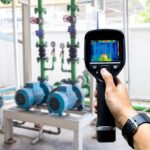
- Conduct a full visual and thermal inspection of power modules, IGBTs, transformers, busbars, and cable terminations, using infrared imaging where safe and practical.
- Check fan operation, speed, and noise; replace fans showing abnormal vibration or nearing recommended operating hours to prevent failures during peak summer loads.
- Verify operation of static bypass and maintenance bypass, confirming that transfer timings comply with IT equipment ride-through capabilities.
- Review firmware versions for UPS controllers and communication cards; upgrade if recommended to fix known issues or add monitoring enhancements, following change-control procedures.
- Inspect protective devices (breakers, fuses, surge protection devices) associated with the UPS input, output, and battery circuits and test mechanical operation where permitted.
Where redundancy allows, modules can be rotated into maintenance bypass to perform deeper checks without exposing critical IT loads.
Semi-Annual Tasks: Battery System Testing
Battery systems are the most climate-sensitive element in Gulf-region UPS installations, and failures are a leading cause of load loss during utility outages. Semi-annual testing focuses on identifying weak strings before they fail under load.
Recommended semi-annual tasks:
- Perform a controlled battery discharge test to a defined depth of discharge where redundancy permits, validating runtime and identifying strings with abnormal voltage drop.
- Carry out full internal resistance or conductance testing for all VRLA blocks, comparing against baseline and manufacturer thresholds for replacement.
- Inspect battery racks and spill containment systems for corrosion or physical damage, particularly in coastal or high-humidity installations.
- Review age profile of all battery strings; many vendors recommend replacement of VRLA batteries between 3 and 5 years in hot climates, even with good float conditions.
Lithium-ion battery systems, increasingly used in new Gulf data centers, require different diagnostics focused on battery management system (BMS) alarms, cell voltage balancing, and temperature gradients but still benefit from regular inspection and periodic discharge verification.
Annual Tasks: Deep Inspection And Capacity Validation
Annual maintenance windows, often aligned with wider data center shutdowns or reduced load periods, allow for more comprehensive testing of the UPS and its interfaces to generators and distribution boards.
Annual activities typically include:
- Full functional testing of UPS modes: normal operation, transfer to battery, transfer to bypass, and return to normal, under controlled load conditions.
- Integrated testing with standby diesel generators, simulating mains failure and observing UPS response, generator start-up, synchronization, and retransfer back to utility.
- Detailed inspection of DC capacitors, snubber circuits, and surge arresters, replacing components approaching end-of-life based on age or test results.
- Thorough cleaning of cabinets, fans, filters, and heat sinks using dry methods suitable for electronics, with additional attention to salt and dust deposits in Gulf coastal sites.
- Review and update of single-line diagrams, operating procedures, and emergency response checklists to reflect any changes in UPS topology, capacity, or control logic.
An annual review meeting should follow to discuss failure trends, incident reports, component replacement forecasts, and any adjustments needed in the maintenance schedules for the coming year.
Adapting Schedules For Hot And Humid Gulf Conditions
While the task lists above resemble those used globally, Gulf climates justify tighter intervals and additional focus on environment and corrosion.
Practical Gulf-specific adjustments include:
- Shortening battery replacement cycles and budgeting for earlier replacement, especially for VRLA batteries operating near the upper end of recommended temperature ranges.
- Increasing frequency of air filter replacement on UPS room cooling units to cope with dust and salt-laden air common in coastal cities such as Dubai, Doha, and Dammam.
- Adding more frequent torque checks and corrosion inspections on busbars and terminals exposed to humidity or industrial pollutants.
- Scheduling intensive inspections just before and after the hottest months (typically May to September) to catch climate-related degradation early.
These changes reduce the probability that UPS components fail exactly when data centers face peak cooling and grid stress during Gulf summers.
Integrating UPS Maintenance With CMMS And DCIM Tools
To keep UPS maintenance schedules for data centers in hot and humid Gulf climates on track, activities should be fully integrated into the facility CMMS and DCIM platforms.
Key integration steps:
- Create preventive maintenance work orders at the recommended daily, weekly, monthly, quarterly, semi-annual, and annual intervals, assigning them to specific roles or contractors with clear scopes.
- Link UPS monitoring alarms and environmental sensor data into DCIM dashboards so operators can correlate events such as repeated overload alarms during generator tests with ambient conditions and historical maintenance records.
- Attach checklists, torque specifications, and test acceptance criteria to work orders to standardize execution and documentation across shifts and service vendors.
- Store battery test results, internal resistance readings, and discharge curves within asset records to support replacement planning and warranty discussions.
Digitizing these processes is especially valuable for multi-site operators managing data centers across several Gulf countries, where climates and grid behavior differ slightly by location.
Outsourcing And Service Contract Considerations
Many Gulf data centers rely on OEM or specialist UPS service contracts to deliver quarterly and annual maintenance while in-house teams handle daily and weekly tasks. When negotiating contracts, operators should pay particular attention to response times, spare parts availability, and coverage of batteries, which are often excluded or limited.
Points to include in service agreements:
- Guaranteed response and restoration times for critical UPS faults, recognizing the high cost of downtime in hosted and enterprise data centers.
- Inclusion of at least one annual integrated UPS and generator test under vendor supervision, with clear reporting deliverables and remedial action plans.
- Clarification of what is covered under battery maintenance: inspection only, testing, or full replacement obligations.
- Stocking of key spares such as control boards, fans, contactors, and interface cards within the region to avoid long import lead times.
Structured contracts aligned with the schedules in this guide help ensure that UPS support keeps pace with the harsher Gulf operating environment.
Training And Safety For Maintenance Personnel
Safe execution of UPS maintenance schedules for data centers in hot and humid Gulf climates requires competent personnel because tasks may involve exposure to live circuits, high fault currents, and large battery systems.
Recommended safety and training measures:
- Formal electrical safety training covering lockout/tagout procedures, arc flash risk, and battery handling tailored to the specific site procedures.
- Clear role definitions separating tasks suitable for operators (visual checks, alarm acknowledgement) from those reserved for licensed electricians or vendor technicians (live testing, internal inspections).
- Up-to-date risk assessments and method statements for battery work, including PPE requirements and emergency response steps for electrolyte spills or thermal events.
- Regular drills for UPS and power failure scenarios so operators are familiar with transfer sequences, communication protocols, and escalation paths.
Strong safety discipline protects staff as well as equipment and is essential when working in enclosed rooms where heat and hydrogen accumulation are possible.
Example Annual UPS Maintenance Calendar For A Gulf Data Center
The table below summarizes how a typical Tier III data center in the Gulf could structure its UPS maintenance activities over a year.
| Interval | Key UPS Activities | Climate-Specific Focus |
| Daily | Visual checks, alarm review, environment logging | Watch for condensation and temperature spikes after sandstorms or humidity surges. |
| Weekly | Log review, filter inspection, housekeeping | Extra dust and salt removal near air intakes and doors. |
| Monthly | Electrical readings, battery inspection and torque checks | Trend float voltages and resistance to catch early battery ageing. |
| Quarterly | Vendor preventive maintenance, thermal imaging, firmware review | Focus on fans, capacitors, and corrosion after hottest months. |
| Semi-Annual | Controlled discharge tests, full resistance testing, rack inspection | Validate runtime before and after peak summer season. |
| Annual | Integrated UPS and generator testing, deep cleaning, documentation updates | Comprehensive review of climate impacts on performance and component life. |
This calendar should be adapted to each site’s redundancy level, business criticality, and historical failure patterns, but it offers a solid starting point tailored to Gulf climatic conditions.
Conclusion
UPS maintenance schedules for data centers in hot and humid Gulf climates must go beyond generic OEM checklists and explicitly account for temperature extremes, humidity swings, and airborne contaminants. By structuring daily through annual activities, tightening intervals for battery and environmental checks, and integrating tasks into digital maintenance systems, operators in the Gulf region can reduce unplanned outages and extend UPS asset life while protecting critical IT services.
Effective execution depends on clear schedules, trained personnel, and well-defined contracts with service providers who understand Gulf operating realities. With these elements in place, data center teams can treat UPS systems as dependable infrastructure rather than hidden single points of failure.
Author Credentials: This guide was developed by 3Phase Tech Services engineering team with extensive Gulf data center operations experience. Our staff includes qualified electrical engineers with UPS system design and commissioning expertise, DCIM specialists managing multi-site Gulf data center portfolios, certified safety practitioners covering arc flash and battery handling, and vendor-accredited technicians for leading UPS platforms. Our team has supported UPS maintenance programs for data centers across the UAE, Qatar, Saudi Arabia, and Oman spanning colocation, enterprise, and government facilities. This operational experience informs practical guidance addressing the real environmental and grid challenges Gulf data center engineers encounter.
Technical Disclaimer: This content provides general guidance on UPS maintenance schedules for data centers in hot and humid Gulf climates. Specific maintenance requirements vary based on UPS technology, battery chemistry, redundancy configuration, and site operating conditions. Organizations should engage qualified engineers and OEM-authorized service providers to develop maintenance programs appropriate for their specific installations. Standards and regulatory requirements including ASHRAE TC 9.9 thermal guidelines, NFPA 70E electrical safety standards, and U.S. Department of Energy data center efficiency guidance are updated periodically. Consult current editions and engage licensed professionals for compliance-critical activities. This information does not constitute professional engineering advice or contractual commitments.