



Precision Heat Mapping with Thermography
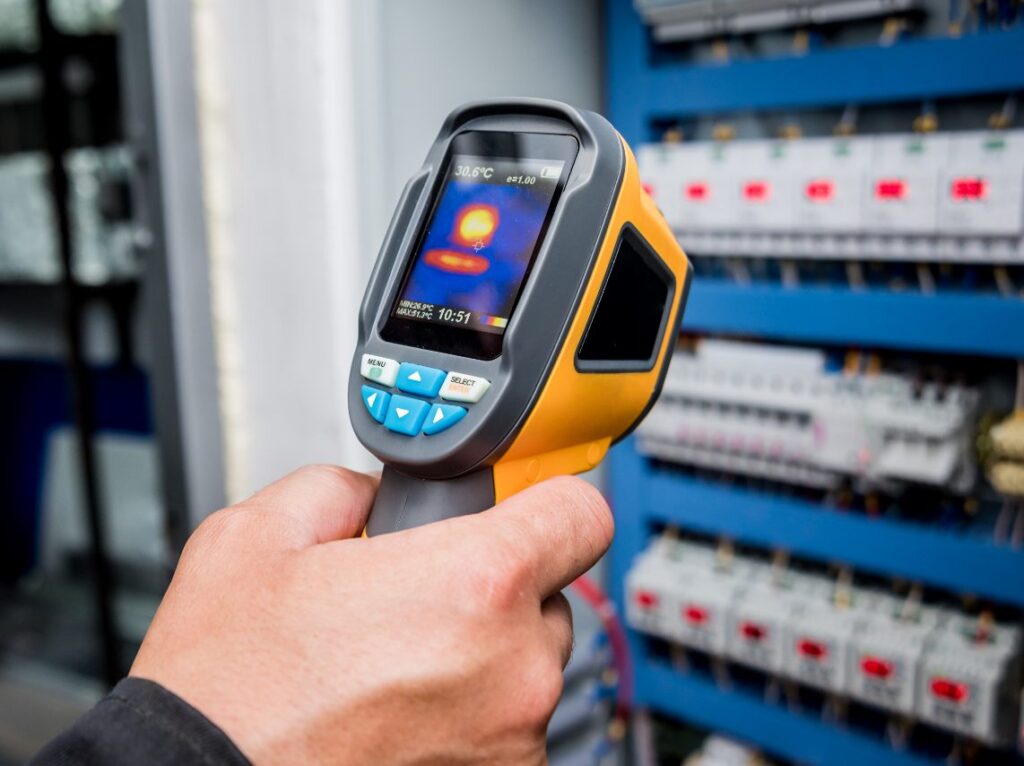
Thermography is a proven non-contact method for measuring surface temperatures with accuracy. Using advanced thermal imaging cameras, it records infrared radiation emitted by objects and converts the data into clear thermal images. This process reveals patterns and temperature variations that are otherwise invisible, giving companies valuable insights into their operations.
Three Phase Tech Services utilizes professional-grade thermal imaging equipment and certified thermographers to deliver comprehensive inspection services. Our systematic approach combines thermal imaging with visual inspection, load analysis, and environmental considerations to provide accurate assessment of equipment condition and performance.
Send Enquiry
Our Clients


How It Works
Thermal cameras capture infrared emissions from equipment, structures, or materials and translate them into visual images. These images highlight heat distribution and differences across surfaces, allowing businesses to detect irregularities, inefficiencies, or potential faults early on.
The thermographic inspection process involves systematic scanning of equipment and structures using calibrated thermal imaging cameras. Thermographers analyze temperature patterns, identify anomalies, and correlate thermal signatures with equipment condition. This analysis considers factors such as load conditions, ambient temperature, wind effects, and emissivity variations of different materials.

Why Thermography Matters
Human eyes can only see visible light, but thermography extends that capability by analyzing the infrared spectrum. This makes it possible to assess temperatures accurately without physical contact. As a result, companies gain a reliable way to monitor performance, identify risks, and evaluate conditions in real time.
Thermography provides objective temperature measurement capabilities that supplement visual inspection and vibration analysis in comprehensive condition monitoring programs. The technology enables detection of problems in their early stages when corrective action can be scheduled during planned maintenance windows rather than emergency shutdowns.
Applications of Thermography
Thermography has practical applications across multiple industries:
Predictive Maintenance
Spot unusual heat signatures to address equipment issues before failure occurs.


Benefits of Thermography
Improved Safety
Human eyes can only see visible light, but thermography extends that capability by analyzing the infrared spectrum. This makes it possible to assess temperatures accurately without physical contact. As a result, companies gain a reliable way to monitor performance, identify risks, and evaluate conditions in real time. Thermography provides objective temperature measurement capabilities that supplement visual inspection and vibration analysis in comprehensive condition monitoring programs. The technology enables detection of problems in their early stages when corrective action can be scheduled during planned maintenance windows rather than emergency shutdowns.
No Contact Required
Inspect high-risk or hard-to-reach areas without direct contact. Infrared thermography enables safe inspection of energized electrical equipment, operating machinery, and hazardous process equipment without physical contact or system shutdown. This capability reduces inspection time and eliminates safety risks associated with direct measurement methods.
Early Problem Detection
Address concerns at an early stage, saving time, money, and resources. Thermal signatures typically appear weeks or months before equipment failure, providing adequate time for planned maintenance scheduling. This early warning capability prevents emergency repairs, reduces downtime, and extends equipment life through timely intervention.
Clear Visual Insights
Thermal images provide detailed evidence of issues that can't be seen with the naked eye. Thermal imaging creates permanent visual documentation of equipment condition that can be analyzed, shared, and compared over time. These images provide clear evidence of problems for maintenance planning, insurance claims, and regulatory compliance documentation.
Why Choose Us for Thermography?
At Three Phase Tech Services, we use advanced thermal imaging technology to deliver accurate results and actionable insights. Our experienced team conducts thorough inspections and provides clear reports that support smarter decision-making. With our expertise, companies can maintain consistent performance, minimize risks, and ensure operational safety.
Get Started with Thermography
Use thermographic inspections to improve safety, efficiency, and reliability across your operations. Contact us today to schedule an assessment and gain valuable insights into your systems.
Frequently Asked Questions
What is infrared thermography and how does it work?
Infrared thermography detects thermal radiation emitted by all objects above absolute zero temperature. Thermal cameras convert infrared energy into visible images, allowing technicians to identify temperature variations that indicate electrical faults, mechanical problems, or building energy losses.
How often should thermographic inspections be performed?
Inspection frequency depends on equipment criticality and operating conditions. Typical schedules include annual inspections for general electrical systems, quarterly for critical equipment, and monthly for high-risk applications. Environmental conditions and equipment age may require more frequent inspections.
What temperature difference indicates a potential problem?
Temperature differences of 10°C or more between similar components typically indicate potential problems. However, this varies by equipment type and operating conditions. Professional analysis considers component temperature ratings, load conditions, and ambient temperature when evaluating thermal patterns.
Can thermography detect all types of electrical problems?
Thermography detects problems that generate heat, including loose connections, overloaded circuits, and failing components. However, it cannot detect all electrical issues such as low-level ground faults, insulation breakdown without heating, or intermittent problems not present during inspection.
What factors affect thermal imaging accuracy?
Accuracy depends on emissivity settings, ambient temperature, wind conditions, solar loading, viewing angle, and camera calibration. Professional thermographers account for these factors to ensure reliable temperature measurements and accurate problem identification.
How do you prioritize thermal inspection findings?
Priority levels are based on temperature difference severity, equipment criticality, safety considerations, and potential failure consequences. Critical findings requiring immediate attention receive highest priority, while minor temperature variations are scheduled for routine maintenance.
What qualifications should a thermographer have?
Professional thermographers should hold certification from recognized organizations (ASNT, ITC, or similar), have training in electrical and mechanical systems, understand thermal principles, and maintain current certification through continuing education.
Can thermal inspections be performed on operating equipment?
Yes, thermal inspections are typically performed on operating equipment to detect temperature differences under normal load conditions. This non-contact method allows safe inspection of energized electrical systems and running mechanical equipment.
Thermography Services
Understanding Infrared Thermography Technology
Infrared thermography detects thermal radiation emitted by all objects above absolute zero temperature (-273°C). This electromagnetic radiation exists in the infrared spectrum (wavelengths from 0.75 to 14 micrometers), which is invisible to human vision but can be measured and converted into thermal images by specialized cameras.
Professional thermal imaging cameras contain microbolometer arrays or quantum detectors that respond to infrared radiation. These detectors convert thermal energy into electrical signals, which are processed to create false-color images where different temperatures are represented by different colors or grayscale intensities.
Key Technical Specifications
Thermal Sensitivity (NETD): The smallest temperature difference the camera can detect, typically measured in millikelvin (mK). Professional cameras achieve sensitivities of 20–50 mK.
Temperature Range: The span of temperatures the camera can measure, typically from -20°C to +1500°C for industrial applications.
Spatial Resolution: The camera’s ability to distinguish between small temperature differences in adjacent areas, determined by detector array size and optics.
Accuracy: The measurement precision, typically ±2°C or ±2% of reading for calibrated instruments.
Applications of Thermography
Thermography has practical applications across multiple industries:
Electrical System Inspection
Electrical thermography detects loose connections, overloaded circuits, failing components, and insulation breakdown in electrical distribution systems. Common applications include:
Switchgear and Panelboards: Identify loose connections, overloaded breakers, and failing contactors
Motor Control Centers: Detect overheating starters, unbalanced loads, and connection problems
Transformers: Monitor cooling system performance, winding hot spots, and tap changer condition
Cable Systems: Locate underground cable faults, splice problems, and overloading conditions
Power Factor Correction: Identify failing capacitors and reactor heating
Busway and Conduit: Detect connection problems and current distribution irregularities
Mechanical Equipment Monitoring
Mechanical thermography identifies bearing problems, coupling misalignment, belt wear, and lubrication issues:
Rotating Equipment: Monitor bearing temperatures, coupling alignment, and gearbox condition
Belt Drive Systems: Identify belt tension problems, pulley misalignment, and bearing wear
Pump and Fan Systems: Detect cavitation, impeller imbalance, and bearing lubrication issues
Compressed Air Systems: Locate air leaks, identify valve problems, and monitor compressor condition
Steam and Process Systems: Detect trap failures, insulation problems, and process irregularities
Building Envelope and Energy Audits
Building thermography identifies insulation defects, air leakage, moisture intrusion, and HVAC system performance issues:
Insulation Assessment: Locate missing, damaged, or wet insulation in walls, roofs, and foundations
Air Leakage Detection: Identify infiltration and exfiltration paths in building envelope
Moisture Investigation: Locate water intrusion, condensation problems, and roof leaks
HVAC System Analysis: Assess ductwork condition, equipment performance, and distribution effectiveness
Window and Door Assessment: Evaluate thermal performance and weatherization effectiveness
Predictive Maintenance
Spot unusual heat signatures to address equipment issues before failure occurs.
Predictive maintenance thermography programs enable condition-based maintenance scheduling by identifying equipment degradation in early stages. Regular thermal inspections establish baseline temperatures and track changes over time, allowing maintenance teams to plan repairs during scheduled outages rather than responding to emergency failures.
Thermal Fault Progression
Electrical and mechanical faults typically progress through predictable thermal patterns:
Stage 1: Initial temperature rise due to increased resistance or friction
Stage 2: Accelerated heating as fault conditions worsen
Stage 3: Rapid temperature increase leading to component failure
Stage 4: Catastrophic failure with potential fire or explosion risk
Maintenance Decision Criteria
Temperature measurements guide maintenance scheduling based on severity levels:
Priority 1 (Critical): Temperature difference >40°C above similar components – immediate action required
Priority 2 (Major): Temperature difference 20–40°C – repair at next scheduled outage
Priority 3 (Minor): Temperature difference 10–20°C – monitor and schedule routine maintenance
Priority 4 (Monitor): Temperature difference <10°C – continue normal operation with periodic monitoring
Professional Thermographic Inspection Services
Comprehensive Electrical Thermography
Our electrical thermography program follows NETA and ASTM standards to ensure reliable detection of electrical system problems. Inspections are performed by certified thermographers using calibrated equipment under appropriate load conditions.
Electrical thermography requires equipment to operate under minimum load conditions (typically 40% of rated capacity) to generate sufficient heat for reliable detection. Our team coordinates with facility personnel to schedule inspections during peak load periods when thermal signatures are most pronounced.
Mechanical System Assessment
Mechanical thermography identifies bearing problems, belt drive issues, coupling misalignment, and lubrication deficiencies in rotating equipment. Our systematic approach includes baseline establishment, trend analysis, and correlation with vibration data where available.
Building Energy Diagnostics
Building thermography services include envelope assessment, HVAC system evaluation, and energy loss identification. We utilize both interior and exterior thermal imaging to provide comprehensive building performance assessment and energy efficiency recommendations.
Professional Equipment and Technology
Thermal Imaging Cameras
We utilize professional-grade thermal imaging cameras with the following capabilities:
High Resolution Detectors: 320×240 to 640×480 pixel arrays for detailed thermal imaging
Multiple Lens Options: Wide angle, standard, and telephoto lenses for various applications
Temperature Measurement: Calibrated measurement ranges from -20°C to +1500°C
Image Fusion: Combination of thermal and visible light images for clear documentation
Data Logging: GPS coordinates, voice annotation, and measurement data storage
Analysis Software
Professional thermography analysis software enables:
Temperature Analysis: Spot measurement, line profiles, and area analysis
Emissivity Correction: Material-specific emissivity settings for accurate temperature measurement
Trend Analysis: Historical comparison and temperature trending capabilities
Report Generation: Automated report creation with thermal and visible images
Database Management: Equipment tracking and inspection history maintenance
Inspection Standards and Certification Requirements
Industry Standards Compliance
Our thermographic inspections comply with recognized industry standards:
ASTM E1934: Standard Guide for Examining Electrical and Mechanical Equipment with Infrared Thermography
NETA MTS: Maintenance Testing Specifications for electrical equipment
ASNT TC-1A: Personnel qualification and certification in nondestructive testing
IEC 62446: Grid connected photovoltaic systems inspection requirements
ISO 18434-1: Condition monitoring and diagnostics of machines – thermography requirements
Thermographer Certification
Our certified thermographers meet industry qualification requirements:
Level I Thermographers: Qualified to perform routine inspections under supervision
Level II Thermographers: Qualified to perform independent inspections, analysis, and reporting
Level III Thermographers: Qualified to establish procedures, train personnel, and oversee programs
Continuing Education: Regular training updates and recertification requirements
Comprehensive Thermographic Inspection Programs
Facility-Wide Assessment
Complete facility thermographic inspections include electrical distribution systems, mechanical equipment, building envelope, and process systems. Our systematic approach ensures comprehensive coverage of all critical systems and equipment.
Route-Based Inspections
Regularly scheduled inspection routes provide consistent monitoring of critical equipment. Routes are customized based on equipment criticality, operating conditions, and historical performance to ensure efficient coverage and reliable results.
Critical Equipment Monitoring
High-priority equipment receives frequent inspection to ensure continued reliability. Critical equipment monitoring includes more stringent temperature criteria and shorter inspection intervals to minimize failure risk.
Baseline Establishment
Initial thermographic surveys establish baseline temperatures for all equipment under normal operating conditions. These baselines provide reference points for future inspections and enable accurate detection of temperature changes indicating developing problems.
Industry-Specific Thermography Applications
Manufacturing Facilities
Manufacturing thermography programs focus on production equipment, electrical distribution, and process systems critical to continuous operation. Common applications include motor monitoring, electrical panel inspection, and process equipment assessment.
Data Centers
Data center thermography emphasizes electrical system reliability and cooling system performance. Regular inspections of UPS systems, distribution panels, and cooling equipment ensure continued operation of critical IT infrastructure.
Healthcare Facilities
Hospital thermography programs prioritize life safety systems, emergency power equipment, and critical care area electrical systems. Inspections focus on maintaining reliable power for patient care equipment and facility operations.
Commercial Buildings
Commercial building thermography includes HVAC system assessment, electrical distribution inspection, and building envelope analysis for energy efficiency and occupant comfort.
Comprehensive Inspection Deliverables and Reporting
Thermal Inspection Reports
Professional inspection reports include executive summary, methodology description, findings summary, thermal and visible images, temperature analysis, repair recommendations, and priority classifications for all identified issues.
Equipment Database
Comprehensive equipment database maintains inspection history, thermal images, temperature trends, and maintenance records for all inspected components. This database enables long-term trending and reliability analysis.
Action Item Tracking
Systematic tracking of inspection findings ensures appropriate follow-up action. Priority classification helps maintenance teams schedule repairs based on criticality and available resources.
Trend Analysis
Historical temperature trending identifies gradual degradation and verifies repair effectiveness. Trend analysis helps predict remaining equipment life and optimize maintenance intervals.
Get Started with Thermography
Use thermographic inspections to improve safety, efficiency, and reliability across your operations. Contact us today to schedule an assessment and gain valuable insights into your systems.
Professional thermography programs provide comprehensive condition monitoring capabilities that detect problems before they cause equipment failures, safety hazards, or operational disruptions. Our experienced team works with facility personnel to develop inspection schedules, establish baselines, and implement effective maintenance strategies.
Inspection Program Development
We work with clients to develop customized thermography programs that address specific facility needs, equipment criticality, and maintenance objectives. Program development includes equipment prioritization, inspection frequency determination, and technician training requirements.
Implementation Support
Our team provides complete implementation support including initial facility assessment, baseline establishment, route development, and ongoing program management. We ensure smooth integration with existing maintenance programs and procedures.
Training and Certification
In-house thermographer training programs enable facility personnel to perform routine inspections and maintain program continuity. Training includes equipment operation, safety procedures, analysis techniques, and reporting requirements.
Professional Service Commitment
3Phase Tech Services provides reliable thermographic inspection services that meet industry standards and deliver actionable results. Our certified thermographers utilize calibrated equipment and follow established procedures to ensure consistent, accurate assessments.
We understand that equipment reliability directly impacts operational success and safety. Our thermography programs are designed to identify problems early, enabling proactive maintenance that prevents failures and extends equipment life while reducing total ownership costs.
Quality Assurance
Our quality assurance program includes equipment calibration, procedure standardization, technician certification, and report review processes. These measures ensure reliable results and consistent service quality across all inspection programs.
Continuous Improvement
We continuously update our procedures, equipment, and training programs to incorporate technological advances and industry best practices. This commitment ensures clients receive the most effective thermography services available.
Ready to improve your facility’s reliability and safety? Contact our thermography specialists to discuss your inspection needs and develop a customized program that addresses your specific requirements and objectives.