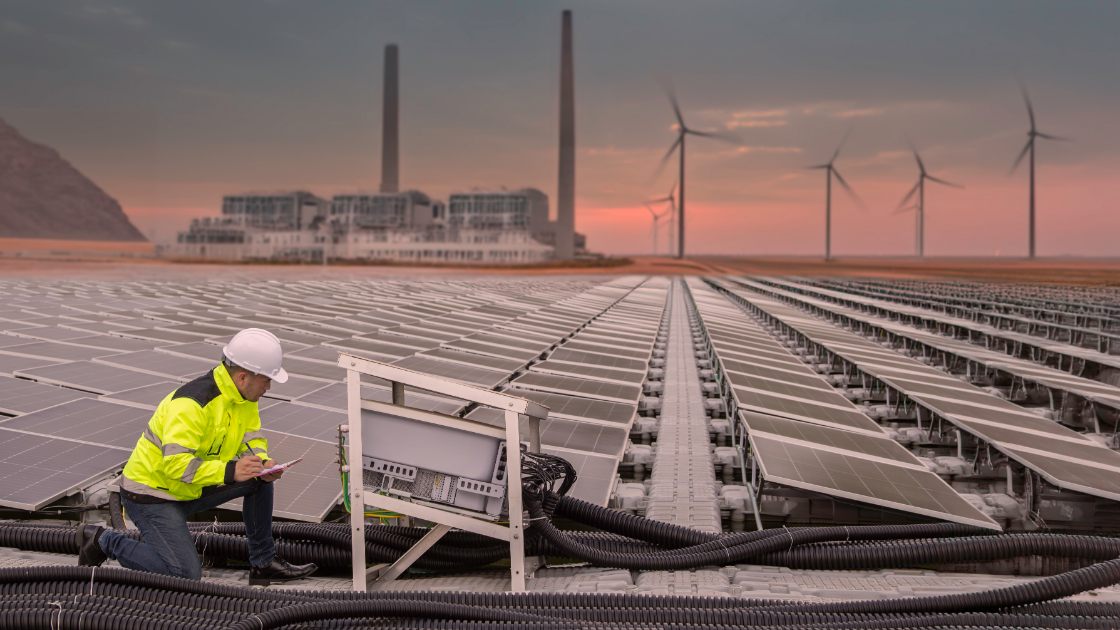
What’s New in Renewable Energy Integration: The renewable energy integration landscape has transformed significantly through 2024 and 2025. Global investment in solar photovoltaic reached USD 500 billion in 2024, surpassing all other generation sources for the first time. Battery storage investment grew by more than 20% and exceeded USD 50 billion, while the cost of lithium-ion batteries dropped 40% in 2024 alone following a 90% reduction over the previous decade.
In the UAE, DEWA’s Mohammed bin Rashid Al Maktoum Solar Park reached 2,860 MW of commissioned capacity by the end of 2024, with plans to reach 5,000 MW by 2030. The Shams Dubai initiative continues expanding rooftop solar across commercial and industrial facilities, while the Hatta pumped-storage hydroelectric project nears completion as the first facility of its kind in the GCC region. For UAE industrial facilities, these developments create unprecedented opportunities for renewable energy integration that reduces operating costs while meeting sustainability objectives.
Author Credentials: This guide is prepared by 3Phase Tech Services’ power systems engineering team with extensive experience implementing renewable energy integration projects across UAE industrial facilities. Our engineers hold certifications in power systems design, solar PV installation, and energy management systems. Through completed projects spanning manufacturing, water treatment, and commercial facilities, our team provides practical guidance based on real-world implementation experience in the regional operating environment.
Scope of Technical Advice: This article provides technical guidance on renewable energy integration for industrial facilities as of January 2026. Specific implementation requirements vary based on facility load profiles, existing electrical infrastructure, and regulatory requirements. For tailored technical assessment of your facility’s renewable energy integration requirements, consultation with qualified engineering specialists is recommended. This guide does not substitute for professional engineering assessment, utility coordination, or equipment-specific manufacturer recommendations.
1. Understanding the Business Case for Industrial Renewable Energy
Renewable energy integration for industrial facilities has evolved from an environmental initiative to a strategic business decision. UAE industrial facilities face unique opportunities that make renewable energy integration particularly attractive, combining high solar irradiance with supportive regulatory frameworks and declining technology costs.
Economic Drivers for Industrial Renewable Energy
The economics of renewable energy integration have shifted dramatically. Solar electricity costs in the UAE reached approximately 1.69 cents per kilowatt-hour in 2024, compared to 11 cents a decade earlier. This reduction makes solar generation competitive with or cheaper than grid electricity for many industrial applications.
Industrial facilities typically operate during daylight hours when solar generation peaks, creating natural alignment between renewable generation and consumption patterns. Manufacturing operations with consistent daytime loads achieve high self-consumption rates, maximizing value by avoiding grid electricity purchases during peak production hours.
Energy cost stability represents another driver. Industrial facilities with variable processes face exposure to utility rate fluctuations and demand charges. Renewable energy integration, particularly combined with battery storage, provides hedging against price volatility and creates predictable energy costs supporting long-term business planning.
Sustainability and Stakeholder Requirements
Beyond economic benefits, renewable energy integration addresses growing stakeholder expectations for corporate sustainability. Customers, investors, and regulatory bodies increasingly evaluate organizations on environmental performance, with energy sourcing becoming a key sustainability metric.
Industrial facilities serving international markets face pressure to demonstrate sustainable operations. Supply chain requirements from multinational customers often specify renewable energy targets or carbon intensity thresholds. Renewable energy integration enables UAE facilities to meet these requirements while maintaining competitive positioning.
Actionable Takeaway Conduct an energy cost analysis for your facility comparing current grid electricity costs against projected renewable generation costs over a 10 to 20 year horizon. Identify your facility’s load profile to determine alignment between consumption patterns and solar generation availability. Document stakeholder sustainability requirements that could be addressed through renewable energy integration.
Contact 3Phase for energy assessment to evaluate your facility’s renewable energy potential.
2. Solar PV Systems for Industrial Facilities
Solar photovoltaic systems represent the most widely deployed renewable energy integration technology for UAE industrial facilities. The region’s high solar irradiance, combined with mature technology and established installation capabilities, makes solar PV the foundation for most industrial renewable energy projects.
System Configuration Options
Industrial solar PV systems can be configured as rooftop installations, ground-mounted arrays, or carport structures depending on available space and facility requirements.
Rooftop Systems utilize existing building surfaces to generate electricity without consuming additional land area. Industrial buildings with large flat roofs are particularly suitable for rooftop solar, with typical system sizes ranging from 100 kW to several megawatts depending on available roof area and structural capacity. The Shams Dubai program facilitates rooftop solar deployment for commercial and industrial facilities through streamlined permitting and net metering arrangements.
Ground-Mounted Systems provide flexibility for larger installations where roof space is limited or structural constraints prevent rooftop deployment. Ground-mounted arrays can be oriented and tilted for optimal solar capture and are easier to maintain than rooftop systems. However, ground-mounted installations require dedicated land area and may not be suitable for facilities with limited site space.
Carport Structures combine solar generation with vehicle shading, providing dual benefit for facilities with significant parking areas. Solar carports protect vehicles from UAE’s intense sun while generating electricity, though installation costs are higher than simple ground-mounted or rooftop systems.
Sizing Considerations for Industrial Applications
Proper system sizing balances generation capacity against facility consumption, grid export limitations, and investment requirements. Under DEWA’s Shams Dubai program, system capacity is capped based on customer connected load, with a maximum of 1,000 kW per plot.
For industrial facilities, optimal sizing targets high self-consumption rates where generated electricity is consumed on-site rather than exported. Systems sized to match baseload consumption during solar production hours achieve highest value by offsetting grid electricity at retail rates.
Load analysis forms the foundation for appropriate sizing. Facilities with consistent daytime operations may find solar generation closely matches consumption. Facilities with variable or shift-based operations may require battery storage for high self-consumption rates.
| System Type | Typical Size Range | Best Application |
| Rooftop | 100 kW to 2 MW | Industrial buildings with large flat roofs |
| Ground-Mounted | 500 kW to 10+ MW | Facilities with available land area |
| Carport | 50 kW to 500 kW | Facilities with significant parking areas |
Actionable Takeaway Assess your facility’s available installation space including roof area, ground space, and parking structures. Review your electricity bills to identify baseload consumption during daylight hours and determine appropriate system sizing targets. Verify structural capacity for rooftop installations through professional engineering assessment.
Partner with 3Phase for solar system design to develop specifications matched to your facility requirements.
3. Battery Energy Storage System Integration
Battery Energy Storage Systems have become essential components of industrial renewable energy integration, addressing the intermittency of solar generation and enabling additional value streams beyond simple renewable self-consumption. By 2025, global battery storage power capacity reached 267 GW with 610 GWh of energy capacity, reflecting rapid growth driven by declining costs and expanding applications.
How BESS Supports Industrial Operations
Battery storage serves multiple functions enhancing renewable energy integration value.
Peak Shaving reduces demand charges by discharging stored energy during high facility demand periods. Industrial facilities often face significant demand charges based on peak power draw. Battery systems limit peak demand, reducing demand charges that may represent 30% or more of industrial electricity bills.
Load Shifting enables storing energy during low-cost periods for consumption during high-cost periods. Combined with solar generation, load shifting maximizes renewable self-consumption by storing midday production for evening or overnight use.
Backup Power provides continuity during grid outages, protecting critical processes. Battery systems transition from grid-parallel to island mode within milliseconds, maintaining power quality during transitions.
Renewable Smoothing addresses solar generation variability from cloud cover. Industrial processes sensitive to power quality benefit from battery systems buffering short-term generation fluctuations.
Sizing and Technology Selection
Industrial battery systems typically use lithium iron phosphate chemistry offering long cycle life, high safety, and stable thermal characteristics. System sizing depends on application, with peak shaving requiring high power capacity while load shifting prioritizes energy storage capacity.
Key parameters include power capacity (kW or MW) and energy capacity (kWh or MWh). The ratio determines discharge duration. A 500 kW, 2 MWh system provides 4 hours at full power. Thermal management significantly affects performance in UAE’s high-temperature environment, with immersion and liquid cooling providing enhanced thermal control.
Actionable Takeaway Analyze your facility’s demand charge structure and identify peak demand periods that could be addressed through battery peak shaving. Evaluate the duration and frequency of grid outages affecting your facility to determine backup power requirements. Consider thermal management requirements for battery systems in your facility’s operating environment.
Explore BESS solutions with 3Phase to integrate storage with your renewable energy systems.
4. Power Purchase Agreements and Procurement Options
Power Purchase Agreements provide industrial facilities with pathways to access renewable energy without capital investment in on-site generation equipment. PPAs have become the preferred procurement method for many large industrial consumers, with technology companies, manufacturers, and retailers among the most active corporate PPA buyers globally.
Understanding PPA Structures
A Power Purchase Agreement is a long-term contract between an electricity generator and a customer for electricity purchase at pre-negotiated prices over 10 to 20 years.
Physical PPAs involve direct delivery of electricity from the generation asset to the customer. In an on-site arrangement, the generator installs and operates renewable equipment at the customer’s facility, selling generated electricity at agreed rates. The generator handles installation, operation, and maintenance while the customer benefits without capital investment.
Virtual PPAs are financial contracts rather than physical delivery contracts. The customer agrees to purchase project output at a fixed price while the generator sells electricity to the grid at market prices. Settlement occurs based on the difference between fixed PPA price and market prices, enabling industrial facilities to support renewable energy development without physical delivery.
Benefits and Considerations
PPAs eliminate upfront capital investment, transferring technology and performance risk to the generator while providing predictable energy costs. Long-term price certainty enables budgeting while hedging against utility rate increases.
Considerations include contract duration, pricing structure, performance guarantees, and termination provisions. Long terms provide stability but reduce flexibility. Pricing may be fixed or include escalation mechanisms tied to inflation or other indices.
| Procurement Option | Capital | Risk Profile | Contract Length |
| Direct Ownership | High | Risk retained | N/A |
| On-Site PPA | None | Risk transferred | 10 to 25 years |
| Virtual PPA | None | Financial risk | 10 to 20 years |
| Green Tariff | None | Utility manages | 1 to 5 years |
Actionable Takeaway Evaluate whether direct ownership or PPA procurement aligns with your capital availability, risk tolerance, and capabilities. Assess contract duration requirements against your facility’s operating horizon.
Discuss procurement options with 3Phase to identify the best approach for your facility.
5. Grid Connection and Utility Coordination
Successful renewable energy integration requires careful coordination with utility providers and compliance with grid connection requirements. In the UAE, DEWA and other utility authorities maintain specific technical standards and approval processes for connecting distributed generation to their networks.
Grid Connection Requirements
Grid-connected renewable systems must meet utility technical requirements for safe and reliable operation. DEWA’s RSB Renewables Standards set requirements for renewable facilities connected to DEWA systems, covering protection schemes, power quality, operating modes, and metering.
Key requirements include anti-islanding protection that disconnects renewable generation when the grid is de-energized, power quality standards for voltage and harmonics, and metering for accurate measurement of imported and exported electricity.
The connection procedure involves obtaining a No-Objection Certificate, design approval, technical review, site inspection, and final connection. Working with DEWA-approved consultants ensures compliance and efficient approvals.
Net Metering and Export Compensation
Under Shams Dubai, industrial facilities export excess solar generation to the grid and receive credit against future consumption. Net metering compares monthly generation against consumption, with excess generation credits applied to subsequent billing periods.
System sizing should consider export limitations and compensation rates. Systems significantly oversized relative to consumption may generate substantial exports receiving lower compensation than avoided grid purchases, reducing overall returns.
Actionable Takeaway Engage with DEWA or the relevant utility authority early in project planning to understand connection requirements and approval timelines. Verify that your proposed system design complies with technical standards for grid connection. Factor net metering compensation rates into economic analysis when evaluating system sizing options.
Partner with 3Phase for utility coordination to navigate grid connection requirements efficiently.
6. Energy Management and Control Systems
Effective renewable energy integration requires sophisticated energy management systems that optimize generation, storage, and consumption across facility operations. Modern energy management systems combine real-time monitoring, automated control, and predictive analytics to maximize value from integrated renewable energy assets.
Energy Management System Functions
An Energy Management System coordinates renewable generation, battery storage, and facility loads to achieve objectives such as minimizing energy costs, maximizing renewable self-consumption, or ensuring power reliability.
Generation Monitoring tracks real-time solar output and compares against expected performance based on weather conditions, identifying issues such as soiling, faults, or degradation.
Load Management monitors facility consumption and identifies opportunities to shift flexible loads to periods of high renewable generation or low grid electricity prices.
Storage Optimization manages battery charge and discharge cycles based on solar forecasts, load predictions, utility rate structures, and battery state of charge to determine optimal dispatch.
Grid Interaction Management coordinates power flows between facility and grid, managing exports during surplus generation and imports during deficits. For backup applications, this includes automatic transition to island mode during outages.
SCADA Integration
Industrial facilities with existing SCADA systems can integrate renewable energy monitoring and control into established automation infrastructure. SCADA integration provides unified visibility across production and energy systems, enabling coordinated optimization.
SCADA systems offer powerful data processing for real-time monitoring and complex control operations. Remote Terminal Units gather data from distributed assets. Programmable Logic Controllers execute control sequences managing operation in grid-connected and island modes. Human Machine Interfaces provide visualization and control through familiar SCADA interfaces.
Actionable Takeaway Evaluate your facility’s existing automation and control infrastructure to identify integration opportunities for renewable energy management. Define energy management objectives including cost minimization, reliability requirements, and sustainability targets that will guide system configuration. Consider weather forecasting and load prediction capabilities that enhance optimization performance.
Implement integrated energy management with 3Phase SCADA solutions.
7. Regulatory Framework and Compliance Requirements
Renewable energy integration in the UAE operates within regulatory frameworks established at both federal and emirate levels. Understanding applicable regulations ensures compliant system design and operation while enabling access to available incentives and support programs.
UAE Renewable Energy Regulations
The UAE has federal and emirate-level regulations governing renewable energy. Dubai, Abu Dhabi, and other emirates maintain distinct frameworks with specific requirements for distributed generation, grid connection, and energy transactions.
In Dubai, DEWA Resolution 46 establishes the Shams Dubai framework, enabling property owners to generate electricity using solar PV and export excess to the distribution system. Generated electricity must be consumed at the premises or exported if excess. Connection conditions specify technical requirements including maximum capacity limits, protection requirements, and metering specifications. Ground-mounted projects are generally not permitted under Shams Dubai.
Abu Dhabi maintains separate frameworks through the Department of Energy. Large-scale projects typically operate under power purchase agreements rather than behind-the-meter net metering.
Building and Safety Requirements
Renewable installations must comply with building codes, fire safety requirements, and electrical standards. Solar PV on buildings requires structural assessment verifying load capacity. Electrical installations must comply with DEWA regulations and IEC standards, with DEWA-registered contractors performing installations.
Battery storage systems face additional safety requirements. Compliance with UL 9540 and NFPA 855 addresses fire safety. Local codes may impose additional constraints on installation locations and configurations.
Actionable Takeaway Identify the regulatory framework applicable to your facility based on emirate and utility jurisdiction. Verify that proposed system configurations comply with capacity limits, installation requirements, and technical standards. Engage DEWA-approved consultants and contractors to ensure compliant system design and installation.
Navigate regulatory requirements with 3Phase expertise in UAE electrical standards and renewable energy regulations.
8. Implementation Planning and Project Execution
Successful renewable energy integration requires systematic project planning and execution that addresses technical, commercial, and organizational requirements. A structured implementation approach minimizes risks and ensures that completed systems deliver expected performance and value.
Project Development Phases
Feasibility Assessment establishes technical and economic viability through site evaluation, load analysis, solar resource assessment, system sizing, and preliminary economic analysis. Assessment identifies constraints, risks, and opportunities that shape subsequent development.
System Design develops detailed technical specifications including equipment selection, electrical system design, structural analysis, and control system architecture. Design documentation supports permitting, procurement, and installation activities.
Permitting and Approvals secures authorizations from utilities, building authorities, and regulatory bodies. For DEWA systems, permitting includes No-Objection Certificate, design approval, and connection authorization.
Procurement selects equipment suppliers, installation contractors, and service providers. Decisions balance equipment cost, performance, warranty terms, and supplier capability.
Installation and Commissioning constructs systems following approved designs and verifies proper operation. Commissioning includes functional testing, performance verification, and safety system validation.
Operation and Maintenance ensures sustained performance through monitoring, preventive maintenance, and corrective maintenance addressing panel cleaning, inverter servicing, and system inspection.
Timeline and Resource Planning
Industrial renewable energy projects typically require 6 to 18 months from feasibility through commissioning depending on size and complexity. Permitting timelines vary, with DEWA Shams Dubai projects typically requiring several weeks to months.
Resource requirements include internal project management to coordinate activities and interface with contractors and authorities. Technical resources include facility staff who will operate and maintain completed systems.
Actionable Takeaway Develop a project timeline accounting for all phases. Identify internal resources required for project management. Establish governance including decision-making authority.
Launch your renewable energy project with 3Phase project development support.
Frequently Asked Questions
What is renewable energy integration and why is it important for industrial facilities?
Renewable energy integration involves connecting renewable generation sources such as solar PV and storage systems with facility electrical infrastructure and the utility grid. For industrial facilities, it reduces energy costs, provides hedging against price volatility, and addresses sustainability requirements from customers and stakeholders.
How does solar PV work for industrial applications?
Solar PV systems convert sunlight into electricity using semiconductor materials. Industrial systems connect to facility distribution through inverters that convert DC generation to AC power. Generated electricity is consumed on-site, with excess exported to the grid under net metering arrangements. 3Phase solar services can design systems matched to your requirements.
What are the benefits of battery energy storage for industrial facilities?
Battery storage enables peak shaving to reduce demand charges, load shifting for time-of-use pricing optimization, backup power for critical processes, and renewable generation smoothing. For operations where interruptions cause significant losses, battery storage provides immediate response faster than conventional generators.
How do Power Purchase Agreements work for industrial renewable energy?
PPAs are long-term contracts where a generator develops, owns, and operates renewable energy equipment and sells output to an industrial customer at agreed prices. The customer benefits from renewable energy without capital investment, while PPAs typically span 10 to 20 years with fixed or escalating price structures.
What are DEWA’s requirements for connecting solar systems in Dubai?
DEWA’s Shams Dubai program enables solar PV connection through a structured approval process including No-Objection Certificate, design approval, and connection authorization. Systems must be installed by DEWA-approved contractors meeting RSB Renewables Standards. Capacity limits apply based on customer connected load, with a maximum of 1,000 kW per plot.
How does net metering work in the UAE?
Net metering compares electricity generation against consumption over billing periods. Excess generation is credited against future bills. When consumption exceeds generation, the facility pays for the net difference at standard tariff rates. Contact 3Phase for net metering guidance.
What size solar system is appropriate for my industrial facility?
Optimal system sizing depends on facility load profile, available space, grid export limitations, and investment objectives. Systems sized to match baseload daytime consumption typically achieve the highest value by maximizing self-consumption. Load analysis determines appropriate capacity for specific requirements.
How do microgrids support industrial renewable energy integration?
Microgrids combine distributed generation, storage, and loads with control systems enabling both grid-connected and island operation. Industrial microgrids automatically transition to island mode during outages, maintaining power to critical loads using on-site generation and storage.
What maintenance do industrial solar systems require?
Solar PV systems require periodic panel cleaning, inverter inspection and servicing, electrical connection verification, and performance monitoring. In UAE conditions, regular cleaning may be required monthly or more frequently depending on dust accumulation.
How long do industrial solar and battery systems last?
Solar PV systems typically carry 25 to 30 year warranties. Battery systems have shorter lifespans depending on chemistry and operating conditions, with lithium iron phosphate systems rated for 10 to 15 years. 3Phase maintenance services support long-term performance.
What are the fire safety considerations for battery storage?
Battery systems require fire detection and suppression systems, thermal management, and appropriate separation from occupied spaces. Compliance with UL 9540 and NFPA 855 addresses fire risks. Local codes may impose additional installation requirements.
How do energy management systems optimize renewable energy use?
Energy management systems monitor generation, consumption, and storage in real-time, coordinating system operation through optimization algorithms. Functions include generation forecasting, battery dispatch optimization, demand management, and grid interaction coordination. 3Phase SCADA services integrate energy management with facility automation.
How long does it take to implement an industrial renewable energy project?
Implementation typically requires 6 to 18 months depending on project size and complexity. Key factors include feasibility assessment duration, permitting timelines, procurement lead times, and installation requirements. Early utility engagement minimizes delays.
Can renewable energy integration work with existing facility electrical systems?
Renewable systems can typically integrate with existing electrical infrastructure through appropriate connection points. Assessment of switchgear capacity, protection coordination, and power quality requirements determines integration approach. Upgrades may be required if existing infrastructure lacks capacity.
What financial considerations apply to renewable energy projects?
The UAE framework relies primarily on market mechanisms rather than subsidies. Net metering provides export value while declining technology costs have made renewable energy economically competitive. Project economics depend on system sizing, consumption patterns, and procurement approach.
Conclusion
Renewable energy integration represents a strategic opportunity for UAE industrial facilities to reduce energy costs, enhance operational resilience, and address sustainability requirements. The combination of favorable solar resources, declining technology costs, and supportive regulatory frameworks creates compelling economics for industrial projects.
Successful integration requires attention to technical design, utility coordination, regulatory compliance, and operational planning. Solar PV provides the foundation, while battery storage enables additional value through peak shaving, load shifting, and backup power. PPAs offer pathways to renewable energy without capital investment.
The eight essential factors covered in this guide provide a framework for evaluating and implementing renewable energy integration projects. 3Phase Tech Services provides comprehensive services from feasibility assessment through ongoing operation.
Contact 3Phase Tech Services to discuss renewable energy integration requirements for your industrial facility.
Technical Disclaimer: This article provides technical guidance on renewable energy integration for informational purposes as of January 2026. Specific implementation requirements vary based on facility characteristics, utility jurisdiction, and applicable regulations. Equipment manufacturer recommendations should be followed. Contact 3Phase Tech Services at 3phtechservices.com/book-consultation for facility assessment and customized recommendations.