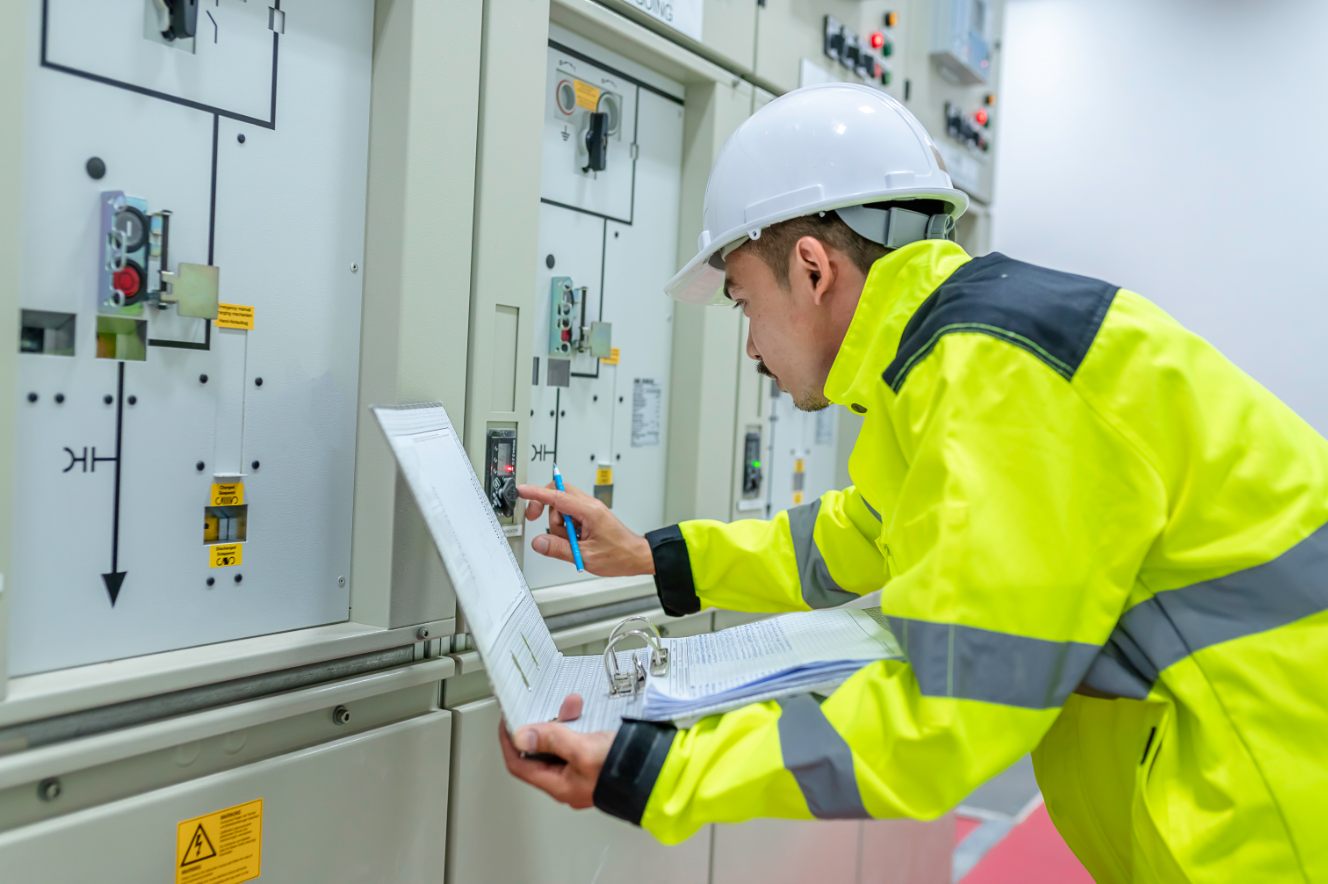
What’s New in Industrial Electrical Safety Testing: The UAE regulatory landscape for industrial electrical safety testing and compliance continues to evolve with significant updates in 2024 and 2025. The Ministry of Industry and Advanced Technology (MoIAT), which now oversees ESMA functions, introduced Ministerial Resolution No. 137 of 2024, establishing updated conformity marks for low-voltage electrical equipment. Products already in the market must comply with new requirements by September 2025, while new products entering the UAE market must meet updated standards by March 2025.
DEWA continues to mandate that all electrical installations comply with IEC (International Electrotechnical Commission) standards and British Standard (BS) requirements for electrical components. Industrial and commercial installations must undergo inspection every two years by an independent contractor, with reports submitted to DEWA in writing. The 2023 NFPA 70B Standard for Electrical Equipment Maintenance transitioned from recommended practices to an enforceable standard, now requiring annual infrared thermography inspections for all electrical equipment. These developments underscore the increasing importance of systematic electrical safety testing programs for UAE industrial facilities.
Author Credentials: This guide is prepared by 3Phase Tech Services’ engineering specialists with extensive experience implementing electrical safety testing programs for industrial facilities across UAE and GCC. Our team includes ITC-certified thermographers, DEWA-registered engineers, and ESMA-trained auditors who work directly with critical infrastructure operators. Through hundreds of completed electrical safety assessments across manufacturing, water treatment, and utility facilities, our engineers provide practical guidance based on real-world implementation experience in the regional operating environment.
Scope of Technical Advice: This article provides technical guidance on industrial electrical safety testing and compliance for UAE industrial facilities as of January 2026. Specific implementation requirements vary based on equipment type, facility classification, and operational conditions. For tailored technical assessment of your specific electrical systems and compliance requirements, consultation with qualified engineering specialists is recommended. This guide does not substitute for professional engineering assessment or regulatory consultation with DEWA, ESMA, or other relevant authorities.
Understanding Industrial Electrical Safety Testing Requirements
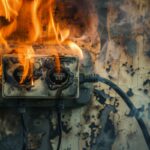
Industrial electrical safety testing and compliance represents a critical operational priority for UAE facility managers. Electrical hazards account for approximately 22% of workplace fires, while contact with electricity remains one of the leading causes of workplace fatalities globally. Within industrial environments, the consequences of electrical failures extend beyond immediate safety risks to include production downtime, equipment damage, and regulatory penalties.
Why Electrical Safety Testing Matters for UAE Facilities
UAE industrial facilities operate under demanding conditions that accelerate electrical system degradation. High ambient temperatures, humidity fluctuations, and dust infiltration stress electrical components beyond typical specifications. Equipment designed for temperate climates may experience accelerated insulation breakdown when operating in Gulf conditions, making regular testing essential for identifying deterioration before failure occurs.
The financial implications of electrical failures in industrial settings are substantial. Unexpected equipment shutdowns can cost manufacturing facilities significant production losses per hour, while electrical fires can result in extensive property damage and potential injury to personnel. Proactive industrial electrical safety testing and compliance programs prevent these outcomes by detecting problems during early stages.
Core Components of Electrical Safety Testing
Effective electrical safety testing programs encompass multiple testing methodologies. Insulation resistance testing measures the electrical resistance of insulation materials to ensure they prevent current leakage. Earth continuity testing verifies that all exposed conductive parts are properly connected to earth. High-voltage (dielectric) testing applies voltage higher than operating levels to verify insulation integrity.
These testing methods work together to provide comprehensive assessment of electrical system health. Facility managers should implement testing programs that address all critical failure modes relevant to their equipment types and operating conditions.
Actionable Takeaway Evaluate your current electrical safety testing practices. Identify which testing methodologies are currently being performed and at what intervals. Document any gaps between current practice and DEWA inspection requirements.
Contact 3Phase for electrical safety assessment to develop a testing program aligned with UAE regulatory requirements.
Essential Electrical Safety Testing Methods
Industrial electrical safety testing and compliance requires implementation of multiple testing methodologies, each addressing specific failure modes and safety concerns. Understanding these methods enables facility managers to develop comprehensive testing programs appropriate to their equipment and operational requirements.
Insulation Resistance Testing
Insulation resistance testing represents one of the most fundamental electrical safety testing methods. The test measures the resistance of insulation materials by applying a DC voltage between conductors and ground, then measuring the resultant current flow. Healthy insulation exhibits high resistance (typically measured in megohms), while degraded insulation shows reduced resistance indicating potential failure risk.
The recommended minimum insulation resistance is typically 1 megohm, though specific requirements vary based on equipment type and voltage class. Modern insulation resistance testers can perform spot readings as well as time-based tests that reveal insulation condition trends. The Polarization Index (PI) test, which compares readings at different time intervals, provides additional diagnostic information.
Insulation resistance is affected by temperature and humidity, requiring documentation of environmental conditions during testing. By tracking values over time, maintenance teams can identify gradual deterioration and schedule replacement before catastrophic failure occurs.
Earth Continuity and Ground Resistance Testing
Earth continuity testing confirms that metal parts of electrical equipment maintain proper connection to the earth ground system. This connection provides a low-resistance path for fault currents, enabling protective devices to operate and disconnect supply before dangerous voltage levels develop.
Ground resistance testing evaluates the effectiveness of the grounding system itself, measuring resistance between the ground electrode and the earth. Elevated ground resistance can prevent protective devices from operating correctly during fault conditions.
For industrial facilities in UAE, soil conditions can affect ground resistance values. Sandy soils typical of the region often exhibit higher resistivity than clay soils, requiring more extensive grounding systems. Regular testing identifies changes in ground system performance that may require corrective action.
Thermographic Inspection
Thermographic inspection uses infrared cameras to detect temperature anomalies in electrical equipment. Because electrical problems typically generate excess heat before visible damage occurs, thermal imaging provides early warning of developing faults. Loose connections, overloaded circuits, and imbalanced loads all produce characteristic thermal signatures that trained thermographers can identify.
NFPA 70B now requires annual infrared thermography inspections for electrical equipment. During inspection, equipment should be under load (at least 40% according to NFPA 70B) because heat generated by loose connections rises with the square of the load. Thermal cameras cannot see through solid enclosures, so panels should be opened where safe for direct imaging of electrical connections.
Infrared inspections should be performed by certified thermographers who understand electrical systems and can properly interpret thermal patterns. A hot spot does not automatically indicate a defect, as some temperature elevation is normal during operation. Qualified thermographers distinguish between normal operating temperatures and anomalies requiring corrective action.
Actionable Takeaway Schedule a thermographic inspection of your facility’s electrical distribution system. Prioritize inspection of high-load equipment including main distribution boards, motor control centers, and transformer connections. Document baseline thermal patterns for comparison during future inspections. Address any anomalies identified during inspection before they progress to failure.
Schedule thermography inspection with 3Phase for comprehensive thermal assessment of your electrical systems.
UAE Regulatory Framework and Compliance Standards
Industrial electrical safety testing and compliance in UAE facilities operates within a framework of national regulations, international standards, and emirate-specific requirements. Understanding this regulatory landscape enables facility managers to develop compliance programs that satisfy all applicable requirements.
DEWA Electrical Installation Regulations
The Dubai Electricity and Water Authority (DEWA) establishes comprehensive regulations governing electrical installations within Dubai. These regulations address design, installation, inspection, and ongoing maintenance of electrical systems. DEWA requires compliance with internationally recognized standards including IEC standards and British Standards (BS) for electrical components.
Key DEWA requirements relevant to industrial facilities include mandatory inspection and testing before initial energization, with DEWA approval required before connecting electrical supply. Industrial and commercial installations must undergo periodic inspection every two years by an independent contractor or consumer, with inspection reports submitted to DEWA in writing. Any defects found during inspections must be rectified at the consumer’s cost, and installations remain subject to periodic random inspections by DEWA.
DEWA regulations specify requirements for load calculation, ensuring electrical systems can handle required power consumption without overloading. Electrical equipment and materials must be of good quality and comply with relevant regulations, operating within DEWA’s declared nominal electric supply voltage. PVC or XLPE insulated cables meeting BS 6004 and BS 6346/BS 5467 standards are recommended for general purposes.
ESMA and MoIAT Requirements
The Emirates Authority for Standardization and Metrology (ESMA), now operating under the Ministry of Industry and Advanced Technology (MoIAT), regulates product certification and conformity assessment for electrical equipment in UAE. Electrical and electronic products represent one of the largest regulated categories, requiring certification before legal sale in UAE markets.
The Emirates Conformity Assessment Scheme (ECAS) applies to electrical equipment including household appliances, power tools, lighting equipment, cables and wiring, batteries, and electronic components. Products must comply with UAE technical regulations including Energy Efficiency Standards and Labelling (EESL) requirements where applicable. Electrical appliances that fail to comply with EESL standards cannot be legally sold in the UAE market.
For industrial facilities, ESMA requirements affect equipment procurement decisions. Facilities must ensure that electrical equipment purchases carry appropriate ECAS certification and ESMA conformity marks. Non-compliant equipment may be subject to seizure at customs or market surveillance actions.
International Standards Referenced in UAE
UAE electrical regulations reference and incorporate international standards from multiple organizations. IEC 60364, the international standard series for low-voltage electrical installations, provides foundational requirements for electrical installation design, erection, and verification. The standard covers protection against electric shock, protection against thermal effects, protection against overcurrent, and selection and erection of electrical equipment.
The latest version of IEC 60364-1:2025 expands scope to include energy efficiency and prosumer electrical installations, reflecting evolving industry requirements. IEC 60364-6 addresses verification requirements including initial verification before placing an installation into service and periodic verification during the installation’s service life.
| Standard | Scope | Application |
| IEC 60364 | Low-voltage electrical installations | Installation design, verification |
| BS 7671 | Wiring regulations | Cable selection, protection |
| IEC 61010-1 | Safety requirements for electrical measurement equipment | Test equipment safety |
| NFPA 70B | Electrical equipment maintenance | Maintenance programs |
Actionable Takeaway Review your facility’s electrical documentation against DEWA inspection requirements. Verify that periodic inspection schedules meet the two-year requirement for industrial and commercial installations. Confirm that all electrical equipment carries appropriate ESMA/ECAS certification. Establish a document management system for inspection reports and compliance records.
Contact 3Phase for compliance assessment to evaluate your facility’s alignment with UAE regulatory requirements.
Implementing an Electrical Safety Testing Program
Developing and implementing an effective industrial electrical safety testing and compliance program requires systematic planning and appropriate resource allocation. The following framework provides guidance for UAE facility managers establishing or improving their testing programs.
Establishing Testing Priorities
Not all electrical equipment requires the same testing frequency or methodology. Effective programs prioritize testing based on equipment criticality, failure consequences, and historical performance. Equipment whose failure would cause production shutdown, safety incidents, or regulatory violations warrants more frequent and comprehensive testing.
Begin by cataloging all electrical equipment, documenting voltage class, age, operating environment, and historical maintenance records. Identify equipment operating under demanding conditions including high ambient temperatures, dust exposure, or continuous heavy loading. Consider failure consequences when establishing priorities, allocating testing resources proportionally.
Testing Frequency Guidelines
DEWA regulations require minimum two-year inspection intervals for industrial and commercial installations. However, many facilities benefit from more frequent testing of critical equipment. NFPA 70B recommends annual infrared inspections, with quarterly or semi-annual inspections for equipment with problematic history.
Insulation resistance testing should be performed annually for motors and transformers, with more frequent testing for equipment approaching end of expected service life. Ground system testing should occur annually, with additional testing after construction or weather events affecting soil conditions.
Establish baseline measurements during initial testing so that subsequent tests can identify trends. Trending data enables predictive maintenance decisions rather than reactive responses.
Documentation and Record Keeping
Comprehensive documentation supports both regulatory compliance and operational decision-making. Maintain records of all electrical safety tests including date, equipment tested, test methodology, environmental conditions, measured values, and pass/fail determination.
Documentation should include equipment identification, technician identification, and calibration status of test equipment used. When anomalies are identified, document both the finding and the corrective action taken.
Actionable Takeaway Develop an equipment inventory listing all electrical assets requiring periodic testing. Establish testing priorities based on criticality and failure consequences. Create a testing schedule meeting DEWA two-year minimum requirements while implementing more frequent testing for critical equipment. Implement a documentation system capturing all test results and enabling trend analysis over time.
Partner with 3Phase for predictive maintenance to develop a comprehensive electrical safety testing program for your facility.
Common Electrical Hazards and Detection Strategies
Industrial electrical safety testing and compliance programs must address the specific hazards most commonly encountered in UAE industrial facilities. Understanding these hazards and their detection methods enables facility managers to focus testing resources on areas of greatest risk.
Loose Connections and High-Resistance Joints
Loose electrical connections represent one of the most common causes of electrical failures in industrial environments. When connections loosen due to thermal cycling, vibration, or improper installation, resistance at the joint increases. This elevated resistance causes localized heating during current flow, potentially leading to insulation damage, fire, or equipment failure.
Thermal imaging provides effective detection of loose connections by identifying hot spots at connection points. During thermographic inspection, technicians compare temperatures across similar connections (such as the three phases of a motor starter) to identify anomalies. Temperature differences exceeding 10-15 degrees Celsius typically warrant investigation and corrective action.
Periodic retorquing of electrical connections addresses loosening before it becomes problematic. Establish retorquing schedules based on equipment type and operating conditions, with more frequent attention to equipment subject to vibration or thermal cycling.
Insulation Degradation
Electrical insulation degrades over time due to thermal stress, chemical exposure, moisture infiltration, and mechanical damage. In UAE’s hot climate, thermal degradation often occurs more rapidly than in temperate regions, particularly for equipment operating in unconditioned spaces or outdoor enclosures.
Insulation resistance testing detects degradation by measuring the resistance of insulation materials. Declining insulation resistance values over successive tests indicate progressive deterioration requiring attention. Equipment showing resistance values approaching minimum acceptable thresholds should be scheduled for replacement or refurbishment before failure occurs.
Visual inspection supplements electrical testing by identifying physical damage, discoloration, or contamination that may affect insulation performance. Dust and conductive contamination on insulation surfaces can create tracking paths that lead to flashover, particularly in high-humidity conditions.
Overloaded Circuits and Imbalanced Loads
Circuits operating beyond their rated capacity generate excess heat that can damage insulation and cause fires. Load growth over time, improper circuit design, or failed balancing between phases can result in overload conditions that testing should identify.
Thermal imaging reveals overloaded circuits through elevated temperatures on conductors, connections, and protective devices. Imbalanced three-phase loads appear as temperature differences between phases, with the more heavily loaded phase running hotter than others.
Current measurement using clamp meters or permanently installed monitoring provides quantitative data on circuit loading. Compare measured currents against circuit ratings and conductor ampacities to identify overload conditions requiring load redistribution or circuit upgrades.
| Hazard | Detection Method | Testing Frequency |
| Loose connections | Thermographic inspection | Annual minimum |
| Insulation degradation | Insulation resistance testing | Annual |
| Overloaded circuits | Thermal imaging, current measurement | Annual |
| Ground system faults | Ground resistance testing | Annual |
| Arc flash hazards | Arc flash assessment | Every 5 years or after changes |
Actionable Takeaway Conduct a comprehensive assessment of your facility’s electrical systems to identify common hazards. Implement thermographic inspection to detect loose connections and overload conditions. Establish insulation resistance testing baselines for critical equipment. Review circuit loading against rated capacities and address any overload conditions identified.
Schedule electrical safety assessment with 3Phase to identify hazards and develop remediation strategies for your facility.
Frequently Asked Questions
What is industrial electrical safety testing and why is it important for UAE facilities?
Industrial electrical safety testing encompasses methodologies designed to verify that electrical systems operate safely and reliably. For UAE facilities, testing is essential because electrical hazards pose significant risks including fire, equipment damage, and personnel injury. Regular testing identifies developing problems before they cause failures, enabling proactive maintenance rather than emergency repairs.
How often should industrial facilities in UAE conduct electrical safety testing?
DEWA regulations require industrial and commercial installations to undergo inspection every two years by an independent contractor. However, NFPA 70B recommends annual infrared thermography inspections, with more frequent testing for equipment with problematic history. Contact 3Phase for guidance on testing frequencies appropriate for your facility.
What testing methods are essential for industrial electrical safety compliance?
Essential testing methods include insulation resistance testing, earth continuity testing, ground resistance testing, and thermographic inspection. High-voltage (dielectric) testing may be required for certain equipment types. Comprehensive programs combine multiple methodologies to address all relevant failure modes.
What are the consequences of failing to comply with UAE electrical safety regulations?
Non-compliance can result in fines and penalties from regulatory authorities, denial of DEWA service connections, insurance claim denials, facility closure orders, and personal liability for facility managers. Beyond regulatory consequences, non-compliance increases risk of electrical fires, equipment damage, and personnel injuries.
How does thermographic inspection contribute to industrial electrical safety testing and compliance?
Thermographic inspection uses infrared cameras to detect temperature anomalies in electrical equipment. Because electrical problems typically generate excess heat before visible damage occurs, thermal imaging provides early warning of developing faults. The method is non-contact and can be performed while equipment operates under load, minimizing operational disruption.
What documentation is required for DEWA electrical safety compliance?
DEWA requires inspection reports submitted in writing following periodic inspections of industrial and commercial installations. Documentation should include equipment identification, inspection date, findings, and corrective actions for any defects identified. Comprehensive documentation supports regulatory compliance and enables trend analysis for predictive maintenance planning.
What qualifications should electrical safety testing personnel possess?
Thermographic inspection should be performed by certified thermographers (such as ITC Level I, II, or III certification) who understand electrical systems. Electrical testing should be conducted by licensed electrical contractors or engineers familiar with DEWA requirements. 3Phase engineers hold relevant certifications for comprehensive assessment.
How can facilities prioritize electrical safety testing when budgets are limited?
Prioritize based on equipment criticality and failure consequences. Focus testing resources on main distribution equipment, motor control centers for critical production equipment, and systems where failure would cause safety incidents. Implement thermographic inspection as a cost-effective screening method that can survey large amounts of equipment quickly.
What is the relationship between electrical safety testing and predictive maintenance programs?
Electrical safety testing forms a core component of predictive maintenance programs. Testing data enables condition-based maintenance decisions, scheduling repairs based on actual equipment condition rather than arbitrary time intervals. Trending test results reveals degradation patterns that enable failure prediction and maintenance planning.
How do UAE climate conditions affect electrical safety testing requirements?
UAE’s high ambient temperatures, humidity fluctuations, and dust conditions accelerate electrical system degradation compared to temperate climates. Insulation materials degrade faster under thermal stress, connections may loosen more frequently due to thermal cycling, and dust contamination can create tracking paths on insulation surfaces. These factors may warrant more frequent testing than minimum regulatory requirements.
What standards apply to industrial electrical safety testing and compliance in UAE?
UAE electrical safety regulations reference IEC 60364 for low-voltage electrical installations, British Standards (BS) for electrical components and wiring, and NFPA standards for electrical equipment maintenance. DEWA regulations incorporate these international standards while establishing UAE-specific requirements. ESMA/MoIAT requirements govern electrical equipment certification.
How should facilities handle electrical safety defects identified during testing?
Defects should be documented, evaluated for severity, and addressed through appropriate corrective action. Critical defects posing immediate safety risk require urgent attention and may warrant equipment shutdown. All corrective actions should be documented, and follow-up testing should verify successful remediation. DEWA regulations require that defects be rectified at the consumer’s cost.
What role does electrical safety testing play in insurance and risk management?
Many insurers require periodic electrical inspections as a condition of coverage, and documented testing programs may qualify facilities for premium reductions. Documented testing history demonstrates due diligence in maintaining electrical systems. Testing programs also identify hazards that might otherwise result in claims, supporting overall loss prevention objectives.
Can electrical safety testing be performed while equipment remains energized?
Thermographic inspection is performed on energized, loaded equipment to detect thermal anomalies during operation. However, insulation resistance testing and high-voltage testing require de-energization and isolation of equipment under test. Testing on or near energized equipment must follow appropriate safety procedures.
How do SCADA and monitoring systems support electrical safety compliance?
SCADA and continuous monitoring systems complement periodic testing by providing real-time visibility into electrical system performance. Permanent current and temperature monitoring can detect overload conditions between scheduled testing intervals. 3Phase SCADA implementation services can integrate electrical monitoring into comprehensive facility management systems.
Conclusion
Industrial electrical safety testing and compliance represents a fundamental requirement for UAE facility managers responsible for operational reliability, personnel safety, and regulatory compliance. The regulatory framework established by DEWA, ESMA, and international standards organizations provides clear guidance on testing requirements, while the practical realities of UAE’s demanding operating environment underscore the importance of proactive testing programs.
Effective electrical safety testing programs combine multiple methodologies including insulation resistance testing, earth continuity verification, ground system evaluation, and thermographic inspection. Each contributes essential information about electrical system condition, and comprehensive programs integrate these methods based on equipment types and operational priorities.
The financial case for electrical safety testing is compelling when considering the costs of electrical failures. Production downtime, equipment damage, regulatory penalties, and potential injury costs far exceed the investment required for systematic testing programs. Facilities that implement proactive testing identify problems early when corrective action remains economical.
3Phase Tech Services provides comprehensive industrial electrical safety testing and compliance services for UAE facilities. Our team of certified engineers and thermographers brings extensive regional experience to electrical safety assessment, combining technical expertise with practical understanding of UAE regulatory requirements.
Contact 3Phase Tech Services to discuss electrical safety testing requirements for your facility.
Technical Disclaimer: This article provides technical guidance on industrial electrical safety testing and compliance for informational purposes as of January 2026. The information presented reflects current understanding of UAE regulatory requirements and international standards but should not be considered comprehensive legal or regulatory advice.
Specific compliance requirements vary based on facility type, location, equipment characteristics, and operational activities. Regulations and standards are subject to revision, and facility managers should verify current requirements with relevant authorities including DEWA, ESMA/MoIAT, and emirate-level regulatory bodies.
Electrical work and testing involve inherent hazards including shock, arc flash, and fire risk. All electrical testing should be performed by qualified personnel using appropriate safety procedures and protective equipment.
Implementation of electrical safety testing programs should be based on professional engineering assessment of facility-specific conditions. Contact 3Phase Tech Services at 3phtechservices.com/book-consultation for facility assessment and customized recommendations.