Medium Voltage Switchgear Types and Selection Criteria for Industries
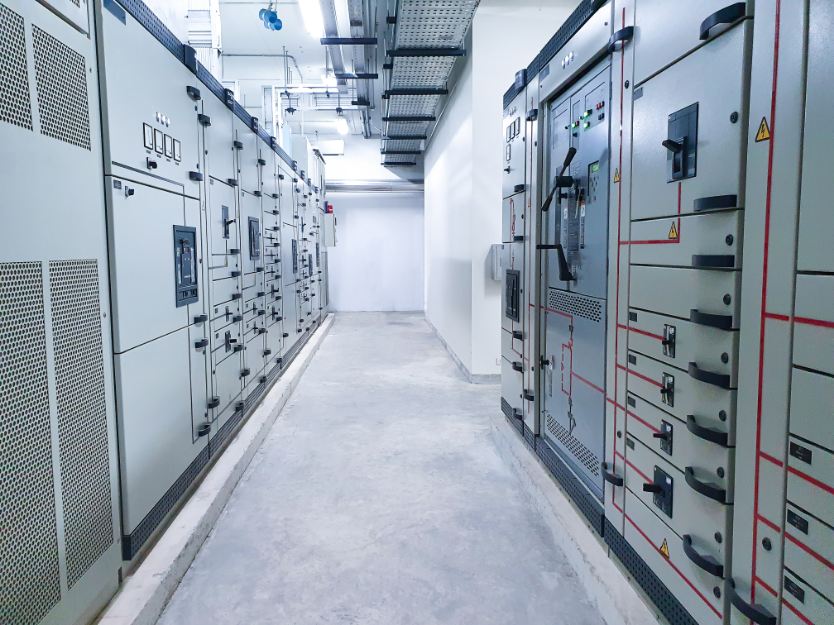
What’s New: DEWA updated medium voltage installation standards in late 2024, mandating arc-resistant switchgear for all new industrial facilities above 5 MVA. Type-tested switchgear meeting IEC 62271 standards now required for design approval, replacing older non-type-tested equipment. Digital relay protection with IEC 61850 communication protocols enables condition monitoring and predictive maintenance. Smart switchgear platforms integrate thermal imaging, partial discharge monitoring, and circuit breaker operating counters providing real-time equipment health data. SF6 gas reduction initiatives drive adoption of vacuum circuit breakers and SF6-free switchgear technologies. New installations favor vacuum interruption over SF6 circuit breakers where technically feasible, supporting UAE environmental sustainability targets. Author Credentials: This guide is prepared by 3Phase Tech Services’ electrical power systems specialists with extensive experience in medium voltage switchgear specification, installation, and maintenance across UAE industrial facilities. Our team provides comprehensive electrical engineering services, switchgear selection, and system design throughout Dubai, Abu Dhabi, and UAE. Scope of Technical Advice: This article provides guidance on medium voltage switchgear types and selection criteria as of January 2026. Specific equipment requirements vary based on facility load, fault levels, and environmental conditions. For specific medium voltage switchgear selection addressing your facility requirements, consultation with qualified electrical engineers is recommended. Medium voltage switchgear failures cause production shutdowns, equipment damage, and safety hazards. A Dubai industrial facility experienced 11kV bus fault destroying non-arc-resistant switchgear, injuring two technicians and causing AED 2.8 million damage plus 3-week production loss. Proper medium voltage switchgear selection affects system reliability, personnel safety, and operational costs. Modern facilities require switchgear handling fault currents while protecting personnel from arc flash incidents. This guide examines medium voltage switchgear types, circuit breaker technologies, selection criteria, and compliance requirements for UAE industrial electrical systems. 1. Understanding Medium Voltage Switchgear Fundamentals Medium voltage switchgear operates at 1kV to 52kV, typically 3.3kV, 6.6kV, 11kV, or 33kV in UAE industrial applications. Switchgear Functions Isolation: Provides visible disconnection ensuring safe maintenance. Protection: Circuit breakers detect and interrupt fault currents protecting equipment. Relays coordinate protection schemes isolating faults. Control: Switching operations for load transfer and system reconfiguration. Local and remote control capabilities. Metering: Current and voltage transformers provide measurement signals for protection relays and monitoring. Voltage Ratings 3.3kV: Small industrial facilities, 5-10 MVA capacity. 6.6kV: Medium industrial facilities, 10-30 MVA capacity. 11kV: Most common UAE industrial voltage, 20-80 MVA capacity. 33kV: Very large facilities, above 50 MVA capacity. IEC 60038 voltage standards specify rated voltages with tolerances. Equipment rated voltage typically 7.2kV, 12kV, 24kV, or 36kV providing safety margin. Actionable Takeaway Identify facility voltage level and capacity requirements. Review existing switchgear age and condition. Document planned load growth over 10-year horizon. Assess arc flash hazard levels requiring upgraded protection. Contact 3Phase Tech Services for medium voltage switchgear assessment and specification services. 2. Medium Voltage Switchgear Types and Technologies Three primary switchgear configurations serve different industrial applications. Air-Insulated Switchgear (AIS) Open construction with air insulation between live parts. Busbars and circuit breakers mounted in metal-enclosed compartments separated by air gaps. Advantages: Lowest initial cost (AED 180,000-280,000 per panel), simple maintenance, easy visual inspection, proven technology, readily available spare parts. Disadvantages: Large physical footprint (2-3m width per panel), susceptible to environmental contamination (dust, humidity, salt), higher arc flash risk without additional protection, requires climate-controlled rooms. Best Applications: Indoor installations with adequate space, clean environments, budge-conscious projects, facilities with experienced maintenance staff. Typical Cost: AED 200,000-300,000 per 11kV panel including circuit breaker and protection. Gas-Insulated Switchgear (GIS) Sealed construction using SF6 gas insulation. All live parts enclosed in grounded metal enclosures filled with SF6 at 4-6 bar pressure. Advantages: Compact footprint (40-60% space reduction vs AIS), excellent reliability, sealed protection from environment, minimal maintenance, long service life (30-40 years), low arc flash exposure. Disadvantages: Higher initial cost (AED 350,000-550,000 per panel), specialized maintenance requirements, SF6 gas environmental concerns, complex fault diagnosis, requires trained technicians. Best Applications: Space-constrained installations, harsh environments (coastal, dusty, humid), high reliability requirements, data centers, hospitals, critical facilities. Typical Cost: AED 400,000-600,000 per 11kV panel including circuit breaker and protection. Hybrid Switchgear (Mixed Technology) Combines air and gas insulation technologies. Circuit breaker in SF6 or vacuum, busbars in air insulation or compact gas-insulated design. Advantages: Balanced cost-performance (AED 250,000-400,000 per panel), reduced footprint vs pure AIS, lower cost vs pure GIS, good environmental resistance, proven reliability. Disadvantages: More complex than AIS, higher cost than AIS, less compact than GIS, mixed technology maintenance requirements. Best Applications: General industrial facilities requiring good performance without GIS cost, moderate space constraints, standard reliability requirements. Typical Cost: AED 280,000-450,000 per 11kV panel including circuit breaker and protection. Switchgear Type Comparison: Feature AIS Hybrid GIS Footprint (11kV panel) 2-3m width 1.5-2m width 0.8-1.2m width Initial Cost AED 200,000-300,000 AED 280,000-450,000 AED 400,000-600,000 Maintenance Moderate Moderate Low Reliability Good Very Good Excellent Environmental Protection Limited Good Excellent Arc Flash Risk Higher Moderate Lower Service Life 25-30 years 30-35 years 35-40 years Actionable Takeaway Assess available electrical room space and constraints. Evaluate environmental conditions (temperature, humidity, dust, salt). Determine criticality and downtime tolerance. Compare total lifecycle cost including maintenance and replacement. Contact 3Phase Tech Services for switchgear type recommendation and cost analysis. 3. Circuit Breaker Technologies Comparison Circuit breaker technology affects switchgear performance, maintenance, and cost. Vacuum Circuit Breakers (VCB) Interrupts current in vacuum bottle containing contacts. Arc extinguishes rapidly in vacuum as contact gap opens. Advantages: No gases or oils, minimal environmental impact, compact design, low maintenance (15-20 year contact life), fast operation (3-5 cycles), quiet operation, suitable for frequent switching. Disadvantages: Limited to 38kV maximum voltage, contact erosion from switching duty, vacuum bottle integrity testing required, specialized replacement parts. Applications: 3.3kV to 33kV systems, general industrial use, frequent switching applications, environmentally sensitive locations. Typical Specifications: 12kV rated voltage, 630-4,000A rated current, 25-50 kA fault interrupting capacity, 10,000 mechanical operations. SF6 Gas Circuit Breakers Uses sulfur hexafluride gas for arc extinction and insulation. Excellent dielectric strength enables compact designs. Advantages: Proven technology, high interrupting capacity (up to 63 kA), suitable for all MV voltages, long contact life, reliable performance, minimal contact maintenance. Disadvantages: